The Knit Polo Guide — What to Look for, How to Wear It
The Knit Polo Guide
What makes a good one, how to wear it, and what to look for before you buy.
A knit polo isn't a T-shirt with a collar bolted on. It's a completely different garment. The fabric is knitted (not woven), which gives it stretch, texture, and drape that a standard pique polo can't match. Done well, it sits somewhere between a fine jumper and a dress shirt — structured enough for dinner, comfortable enough for a Saturday.
This guide covers what actually matters when choosing one: construction, fit, fabric weight, and how to style it without looking like you're trying too hard.
In This Guide
What Makes a Knit Polo Different
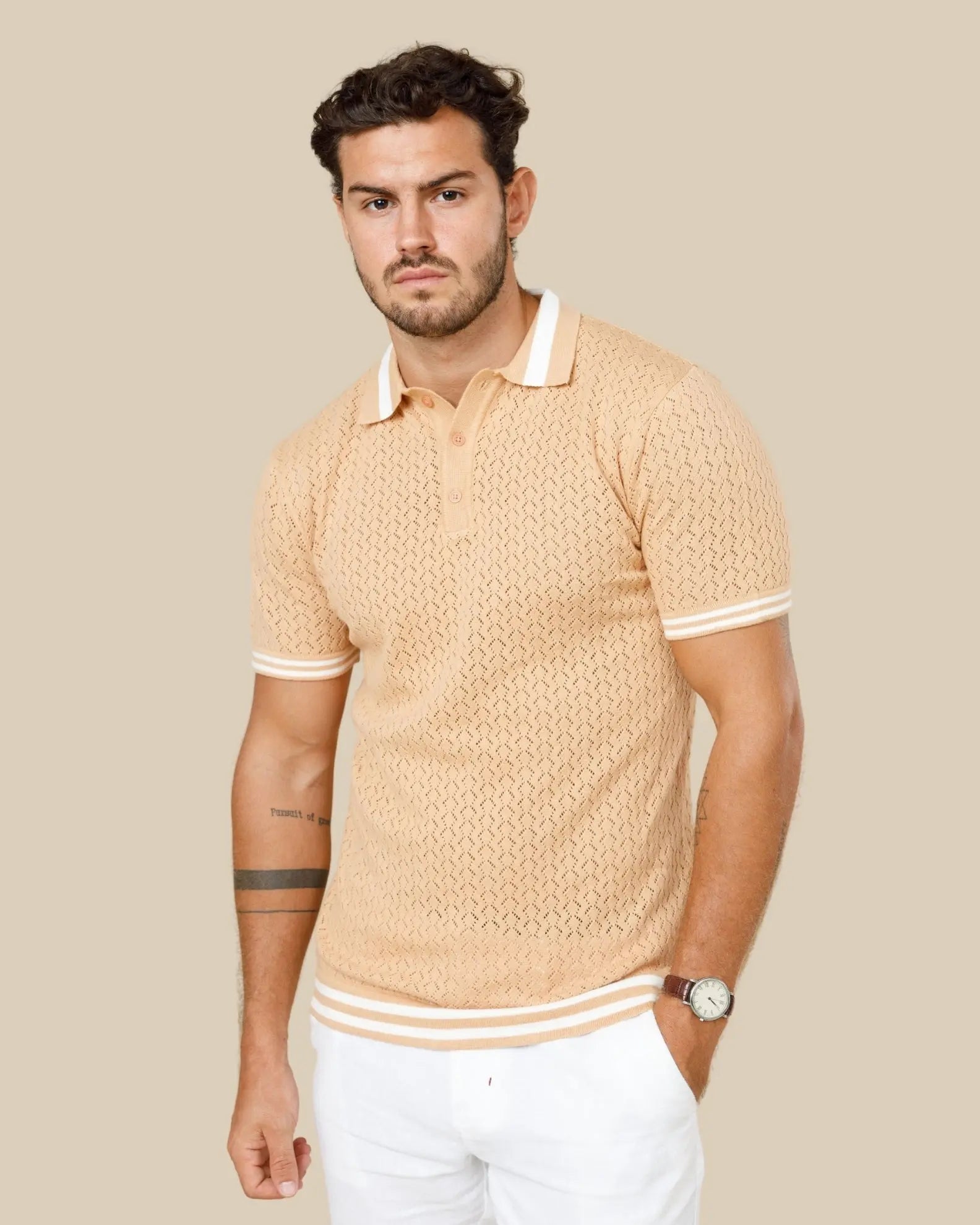
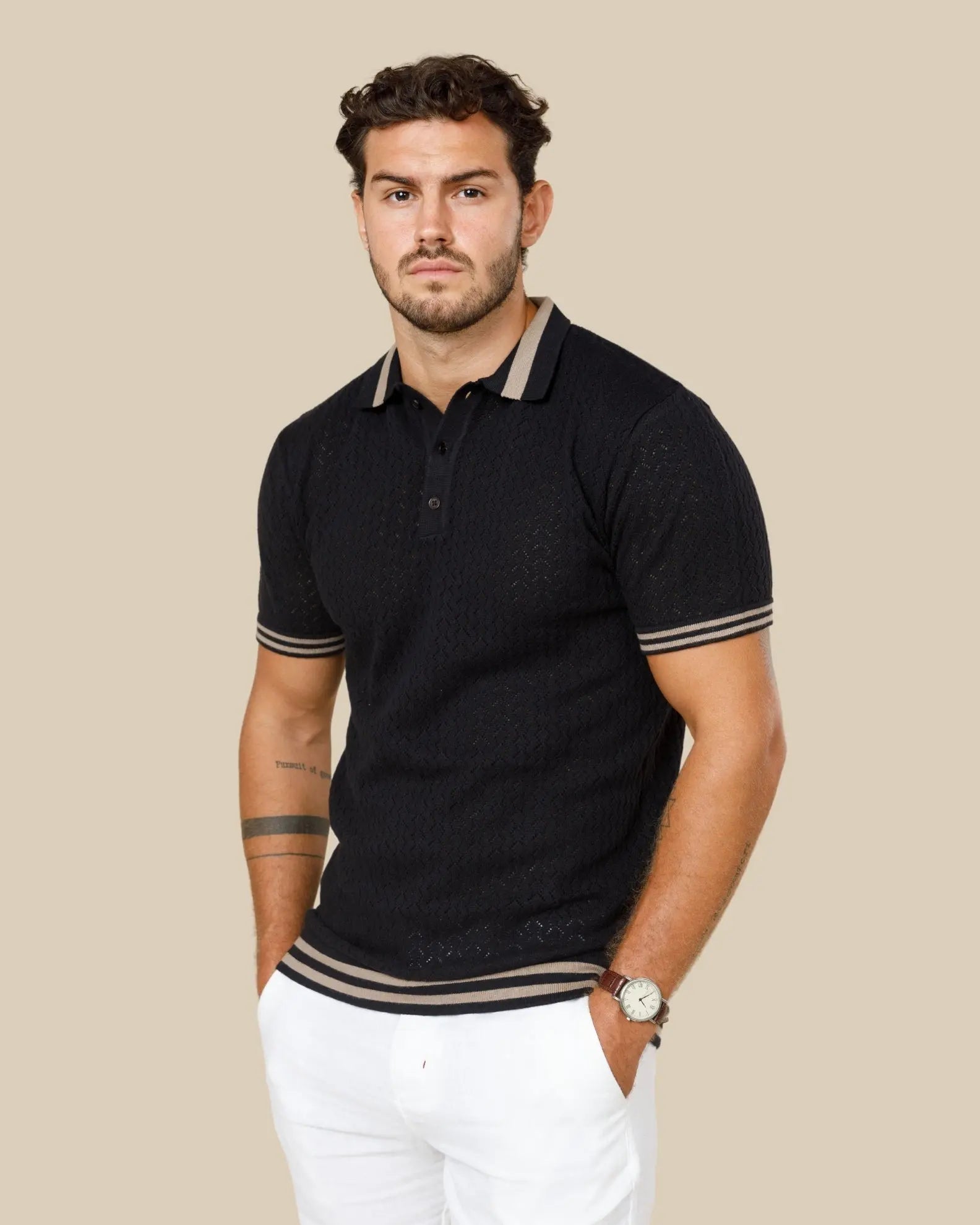
Most polo shirts you'll find on the high street are made from woven pique cotton — the bumpy, slightly stiff fabric with a grid-like texture. A knit polo uses an entirely different construction. The fabric is knitted from yarn on fine-gauge machines, producing a smooth, drapey material with natural stretch.
The practical difference: a knit polo moves with you rather than sitting rigidly on your frame. It doesn't bunch at the waist or balloon at the sides. The collar lies flatter and holds its shape without the cardboard stiffness of a woven polo. It's why knit polos work under a blazer where a standard polo looks out of place — the fabric is thin enough to layer cleanly.
The trade-off is that knit polos require slightly more care. They're more prone to snagging than woven cotton, and cheaper versions will pill quickly. Construction quality matters more here than almost any other garment in your wardrobe. See our care guide for knits for specifics.
Our Knit Polo Collection
Fabric Weight: Fine Gauge vs Chunky Knit
Knit polos come in different gauges, which refers to how tightly the fabric is knitted. This is the single biggest factor in how the garment looks and when you can wear it.
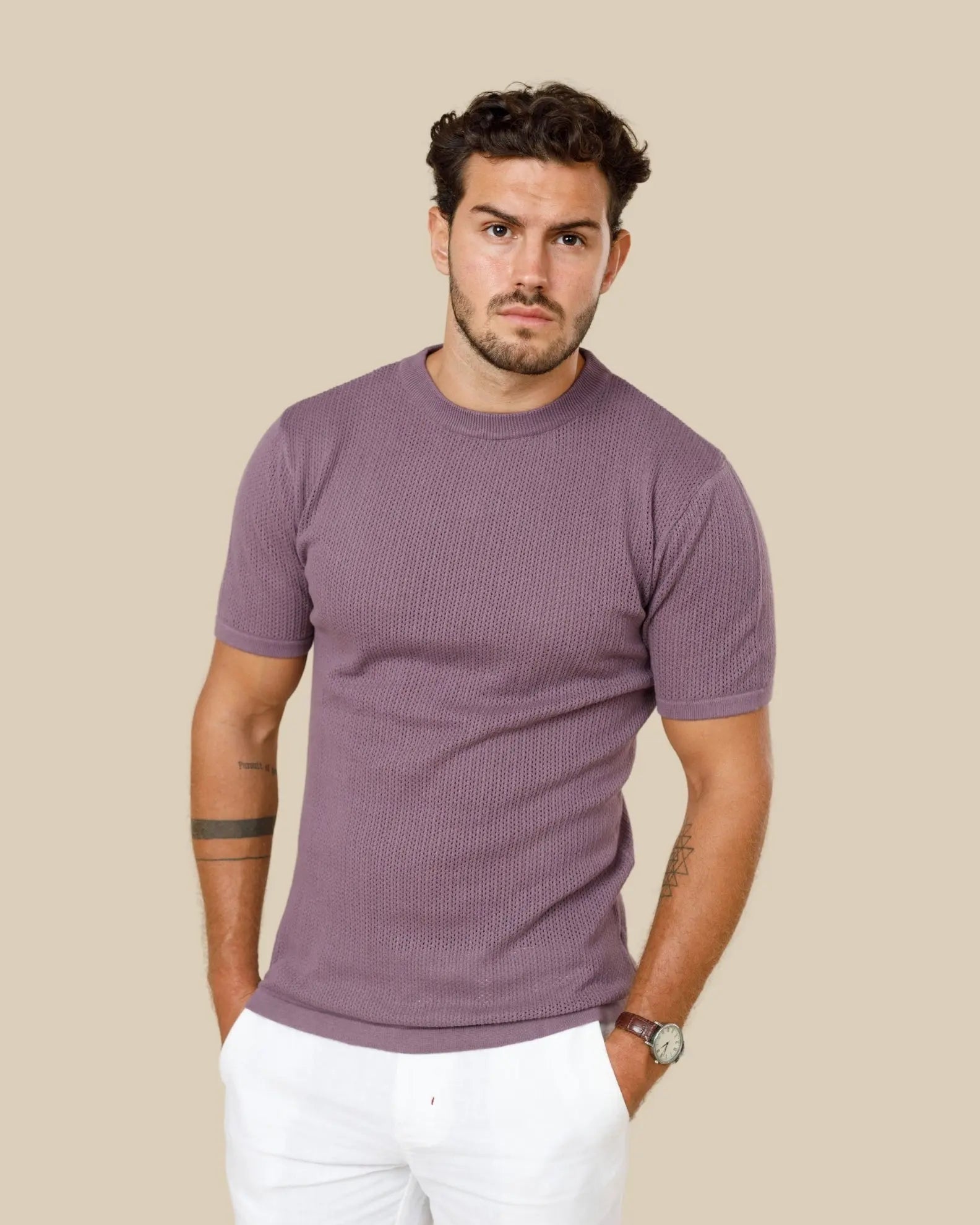
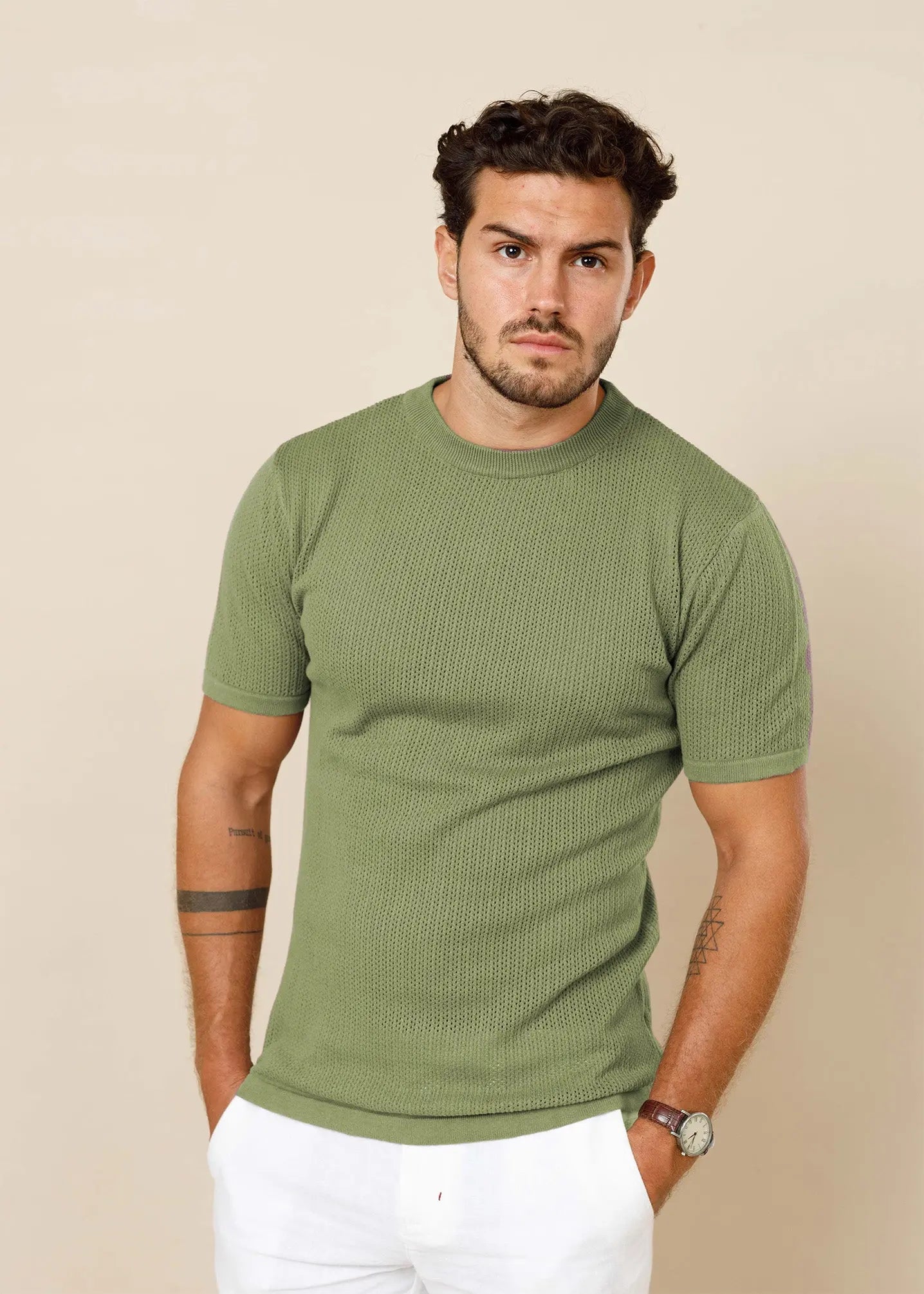
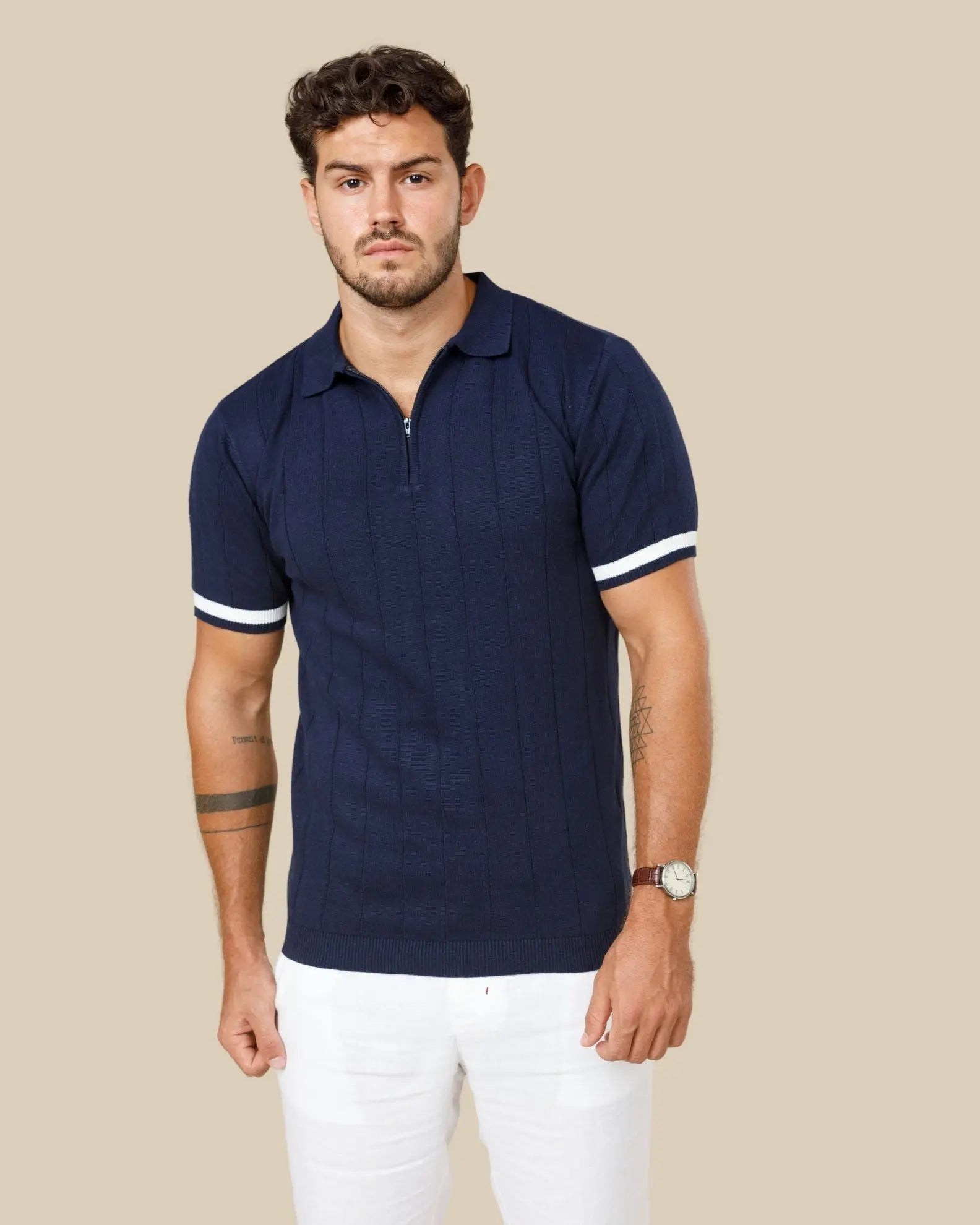
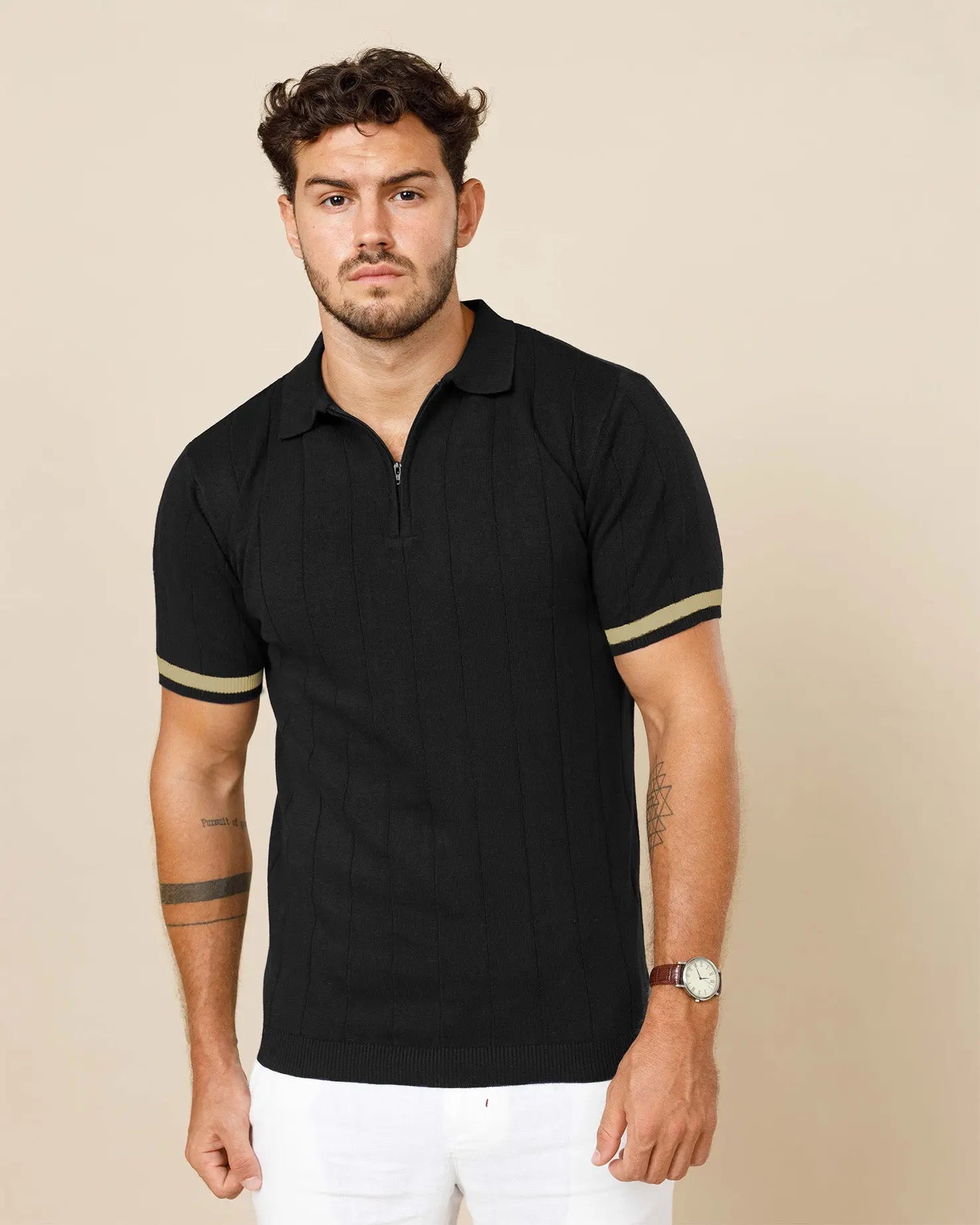
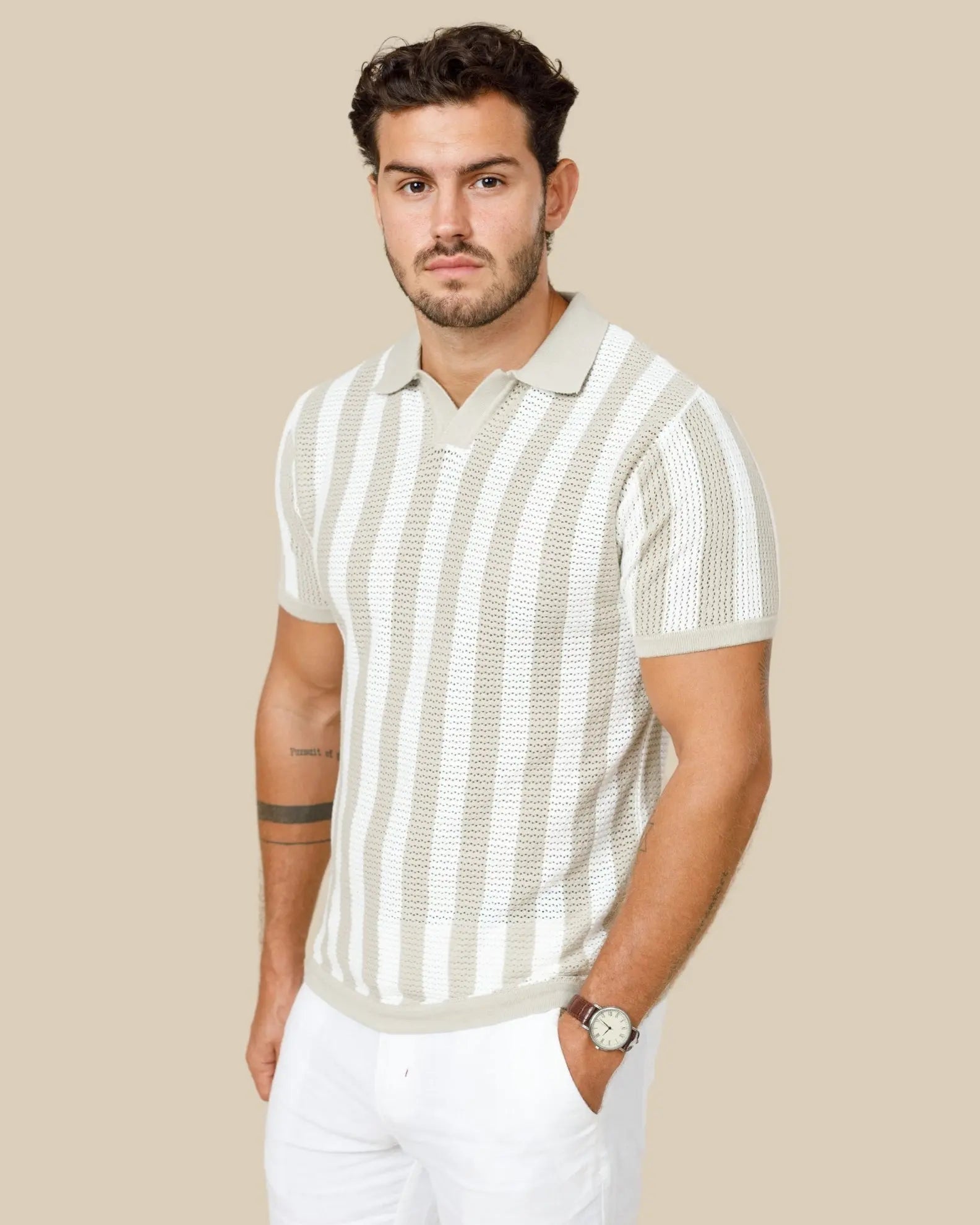
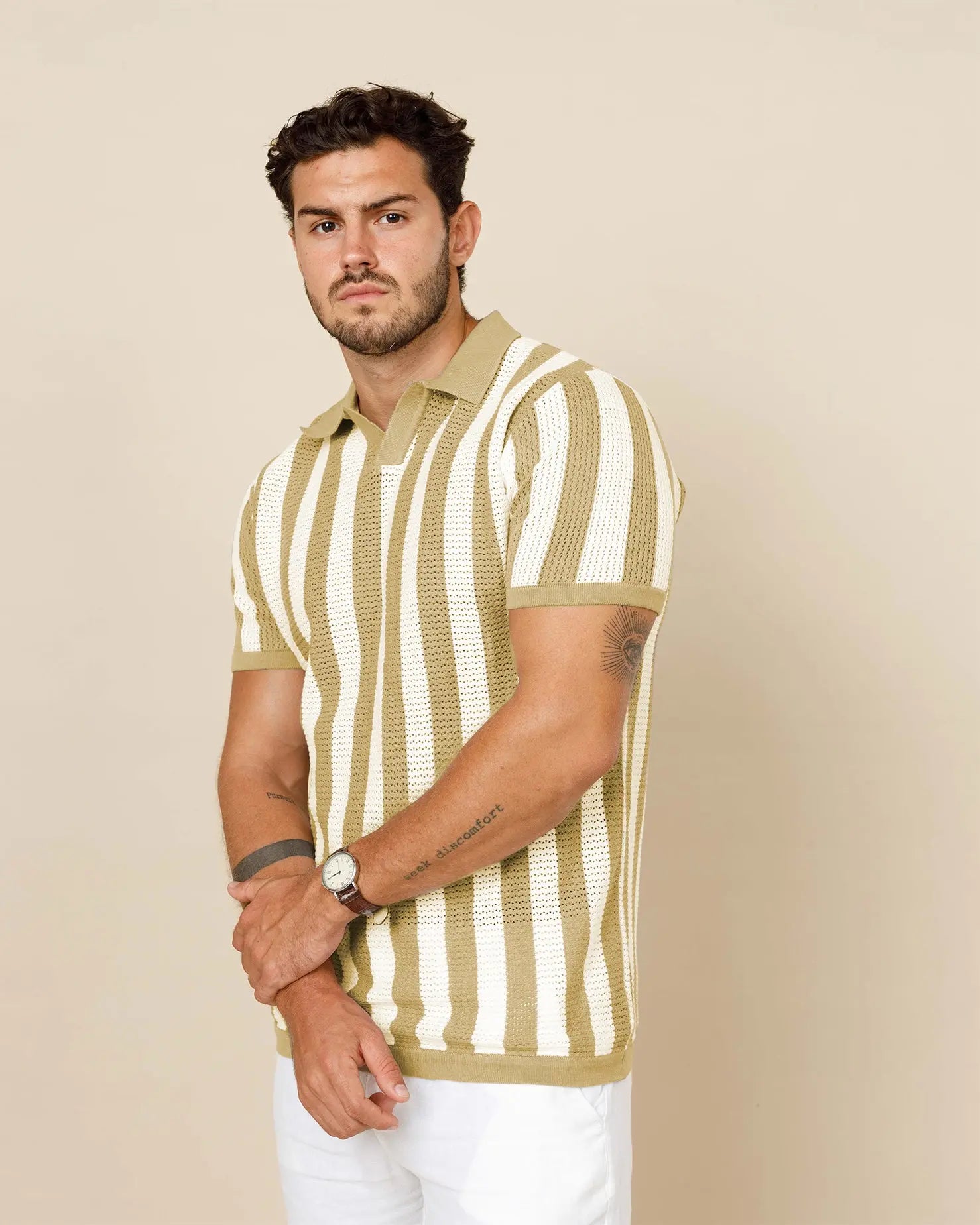
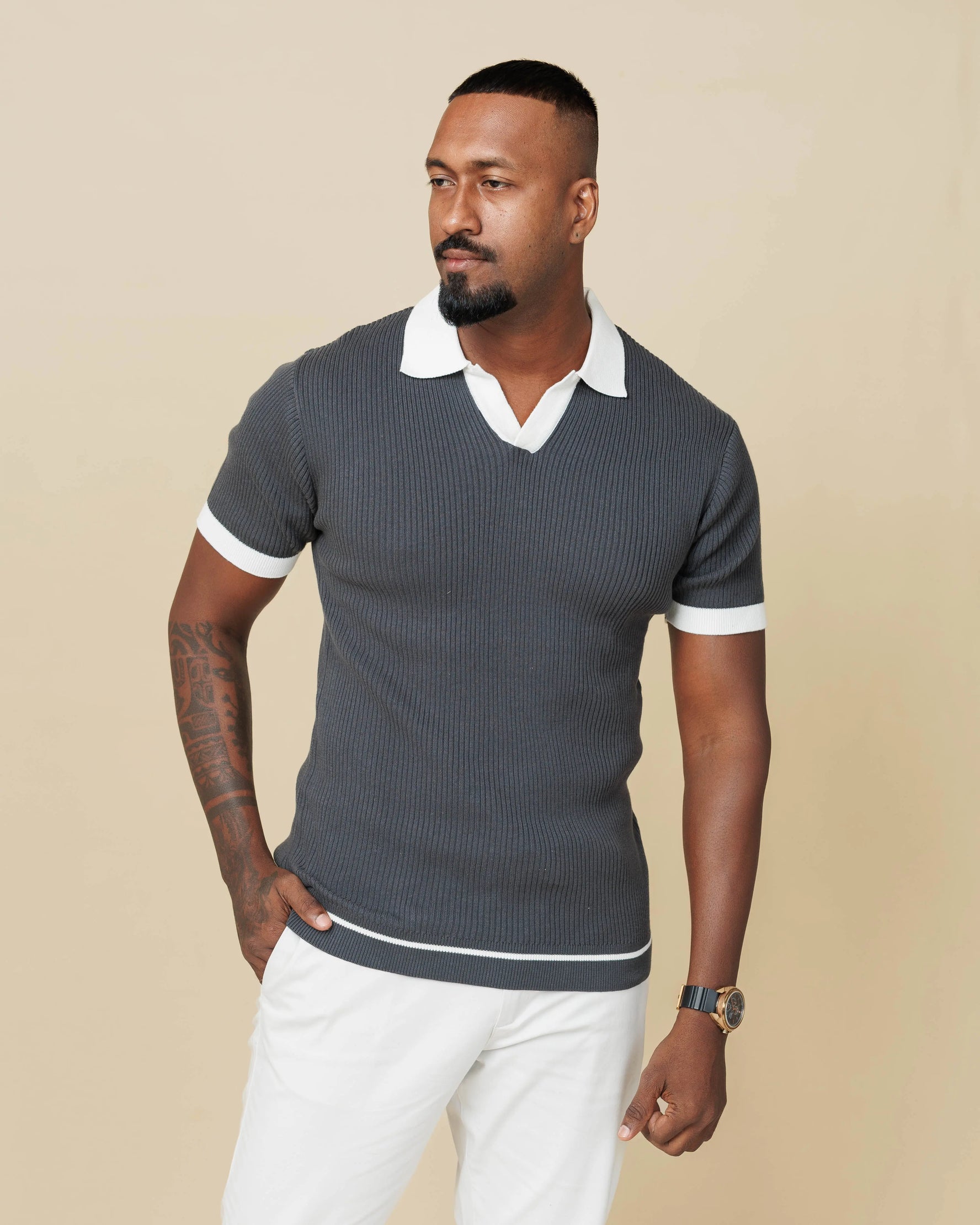
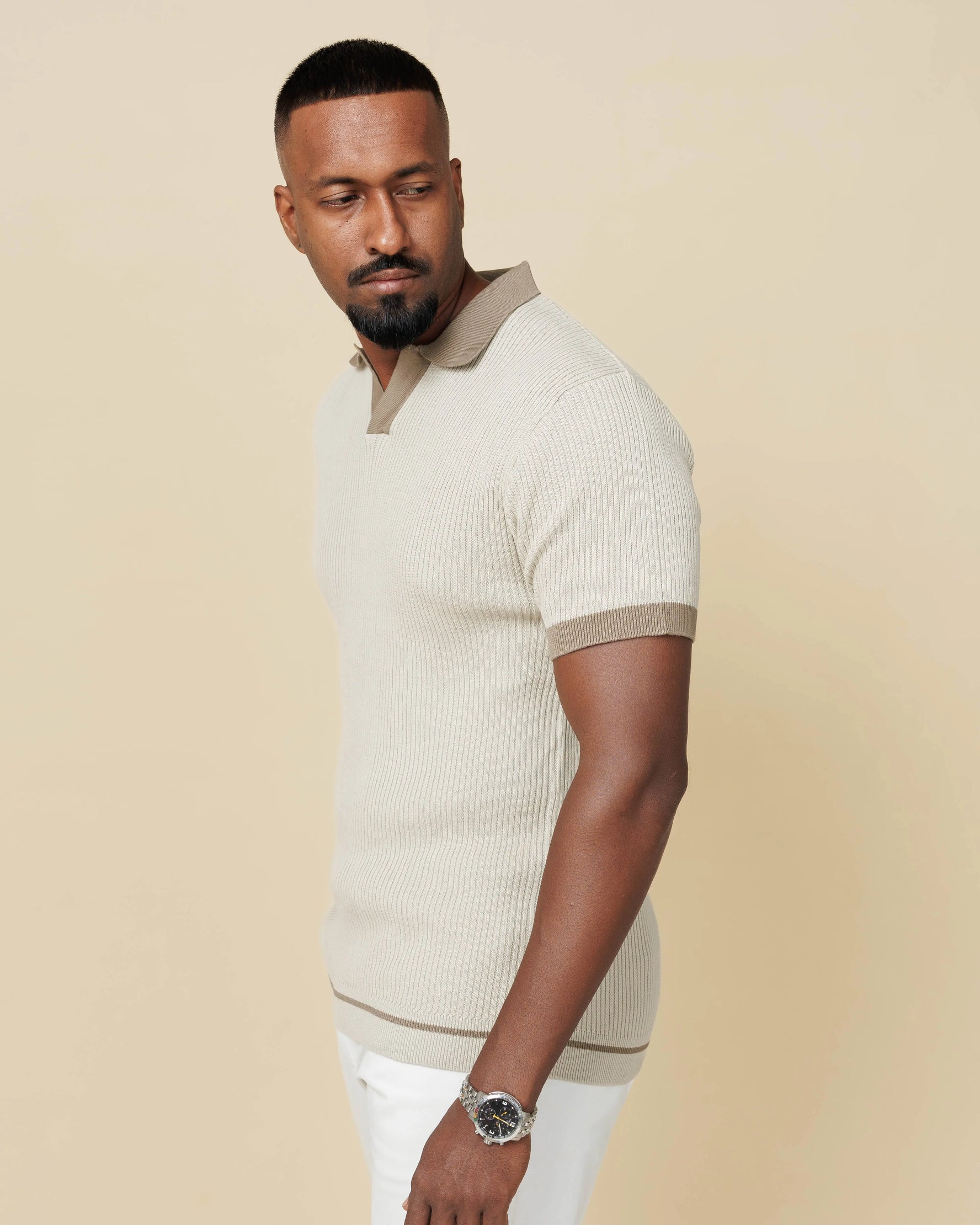
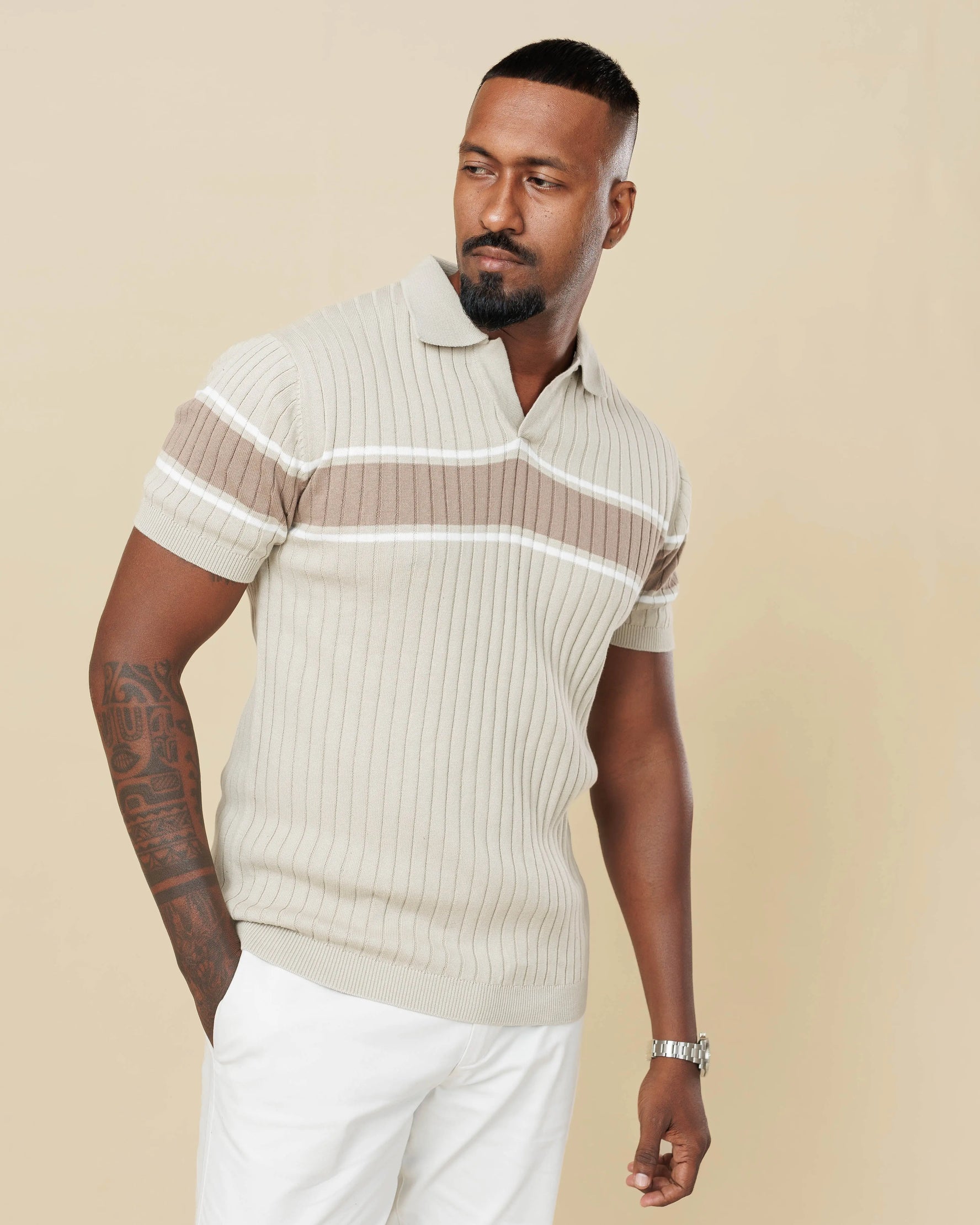
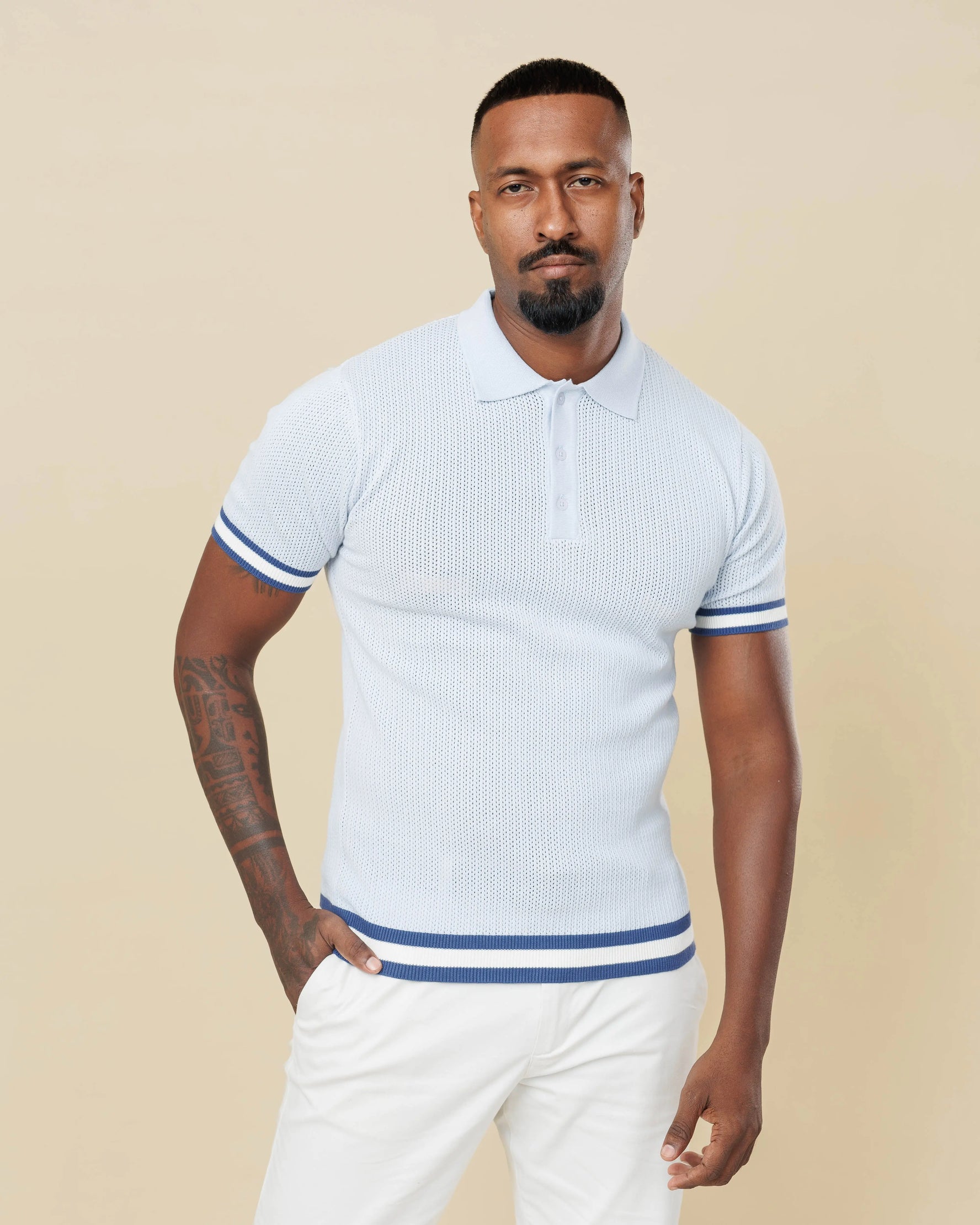
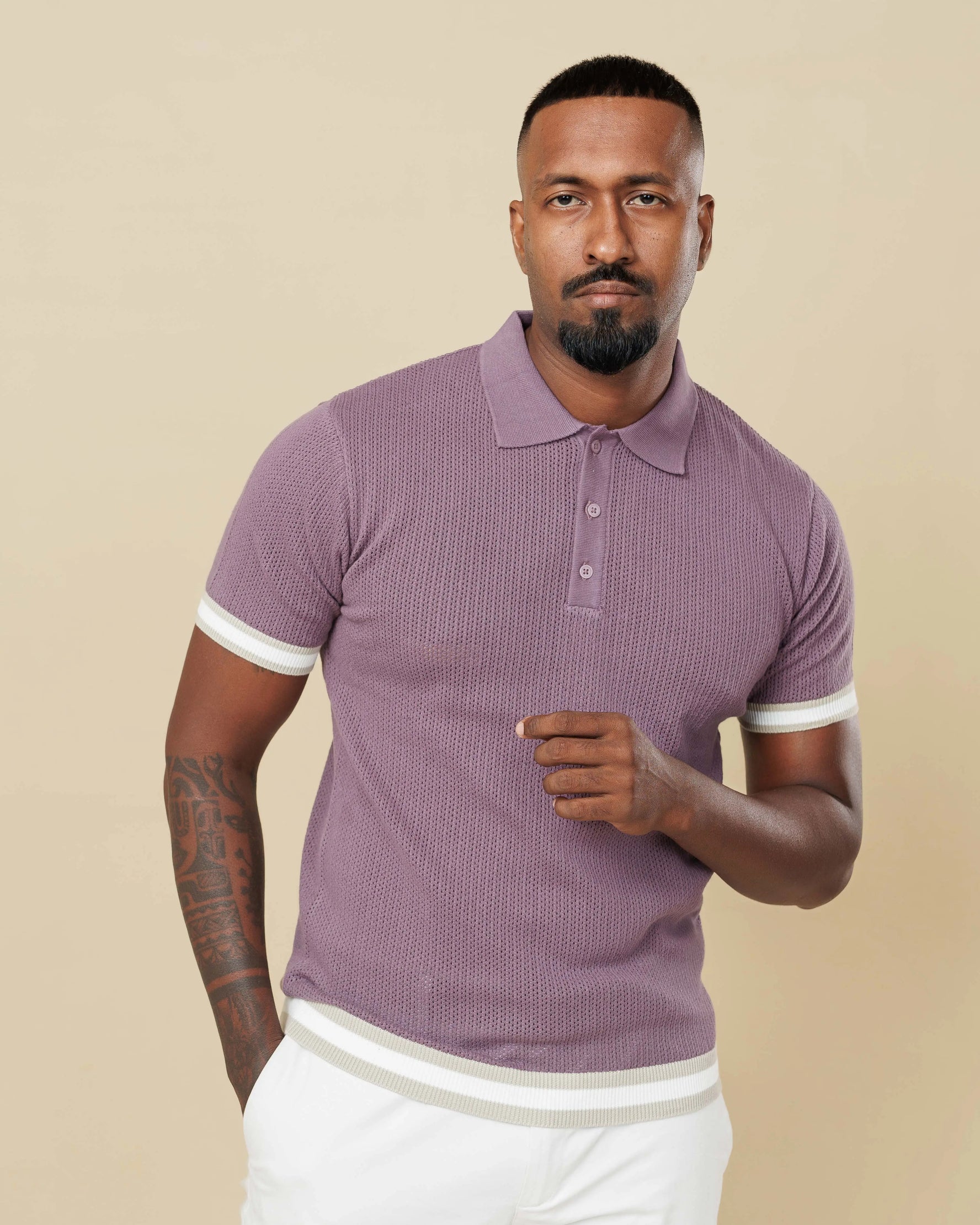
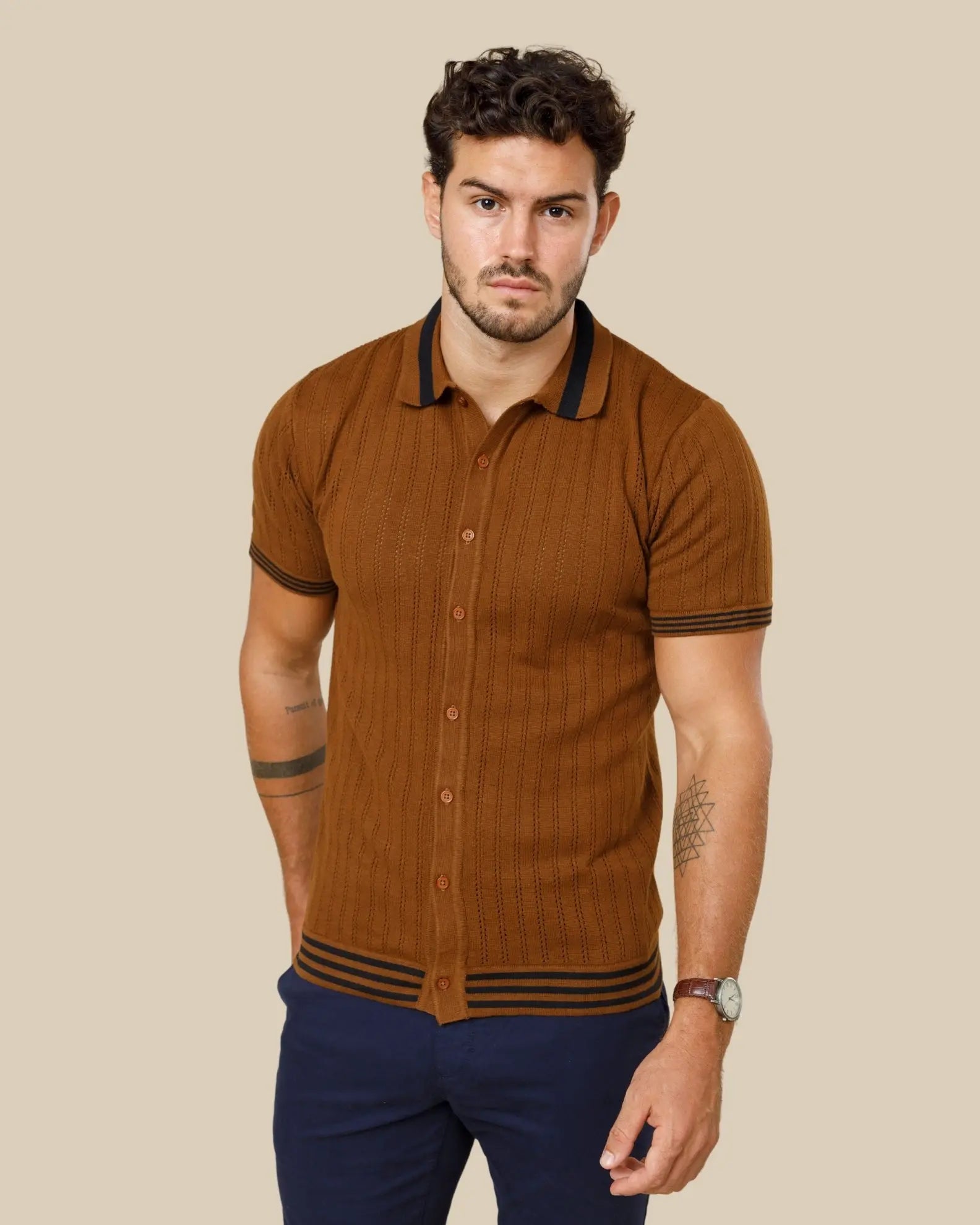
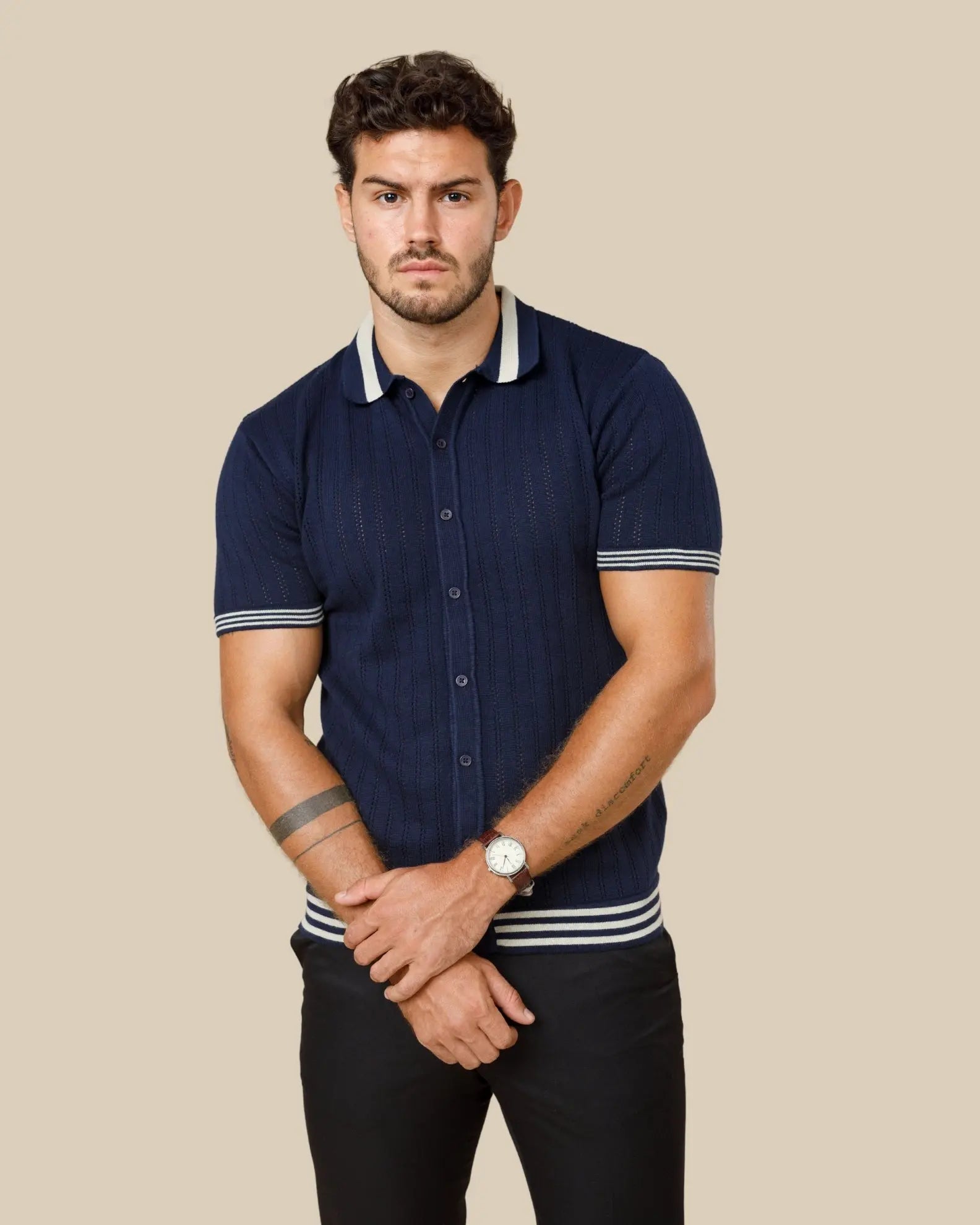
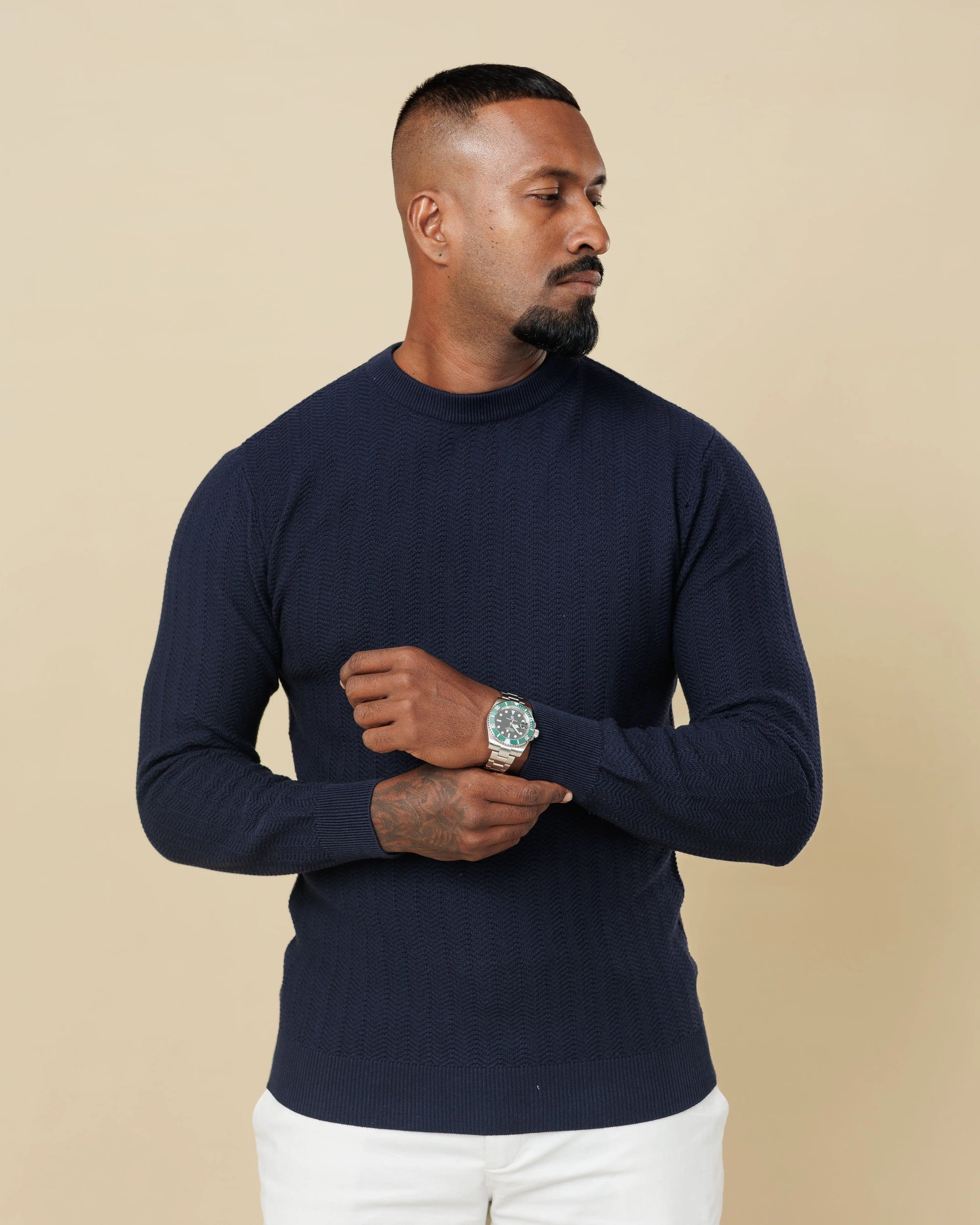
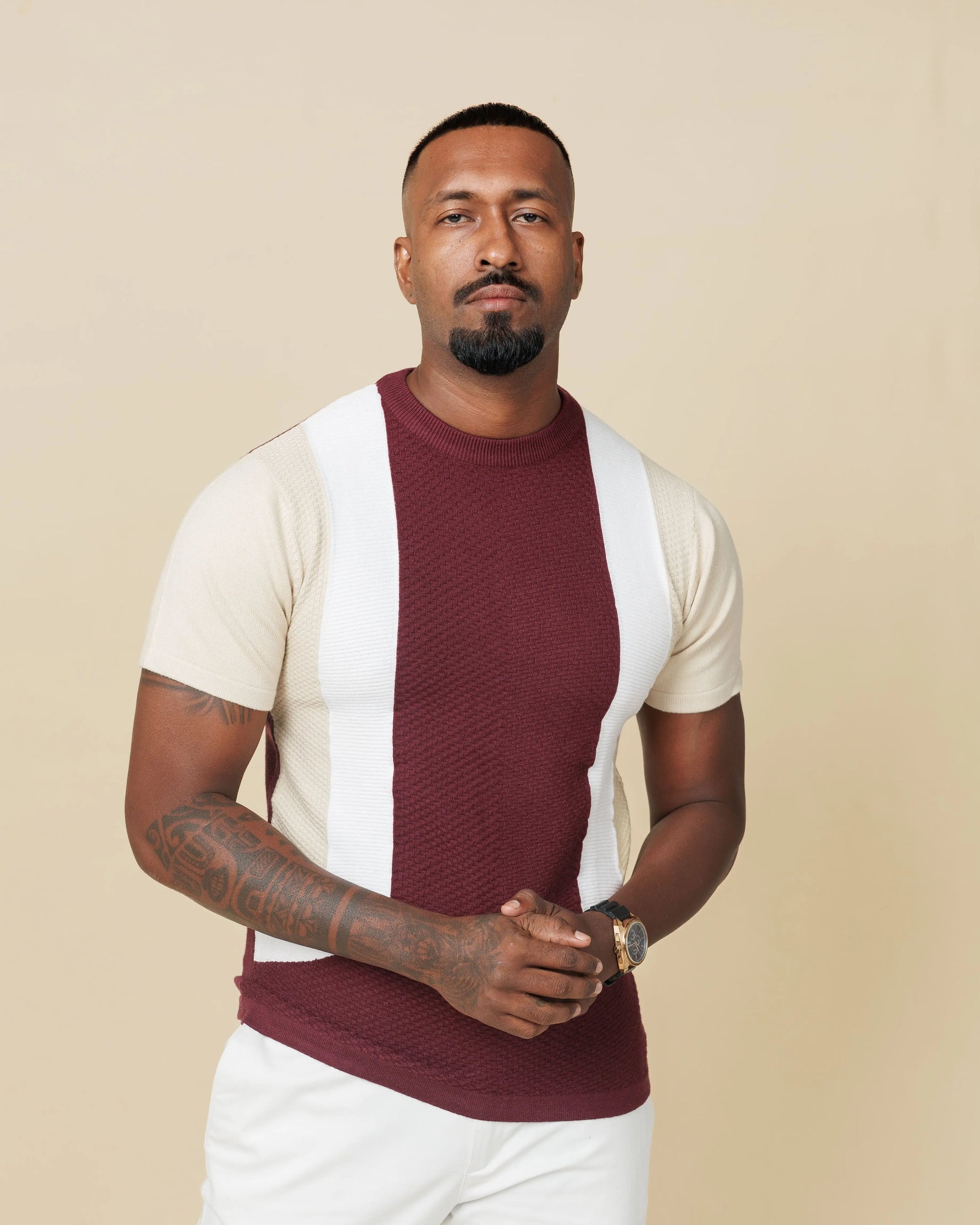
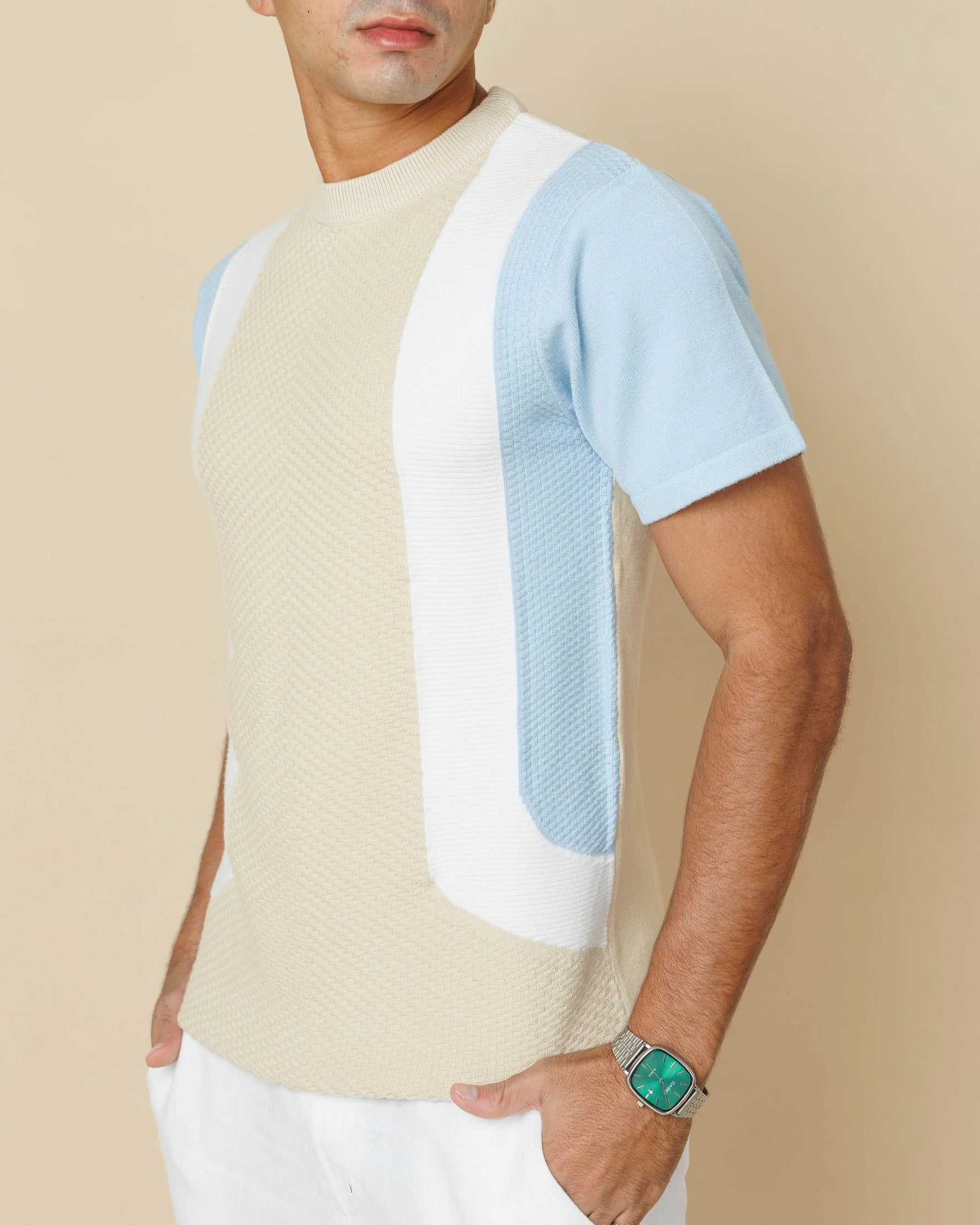
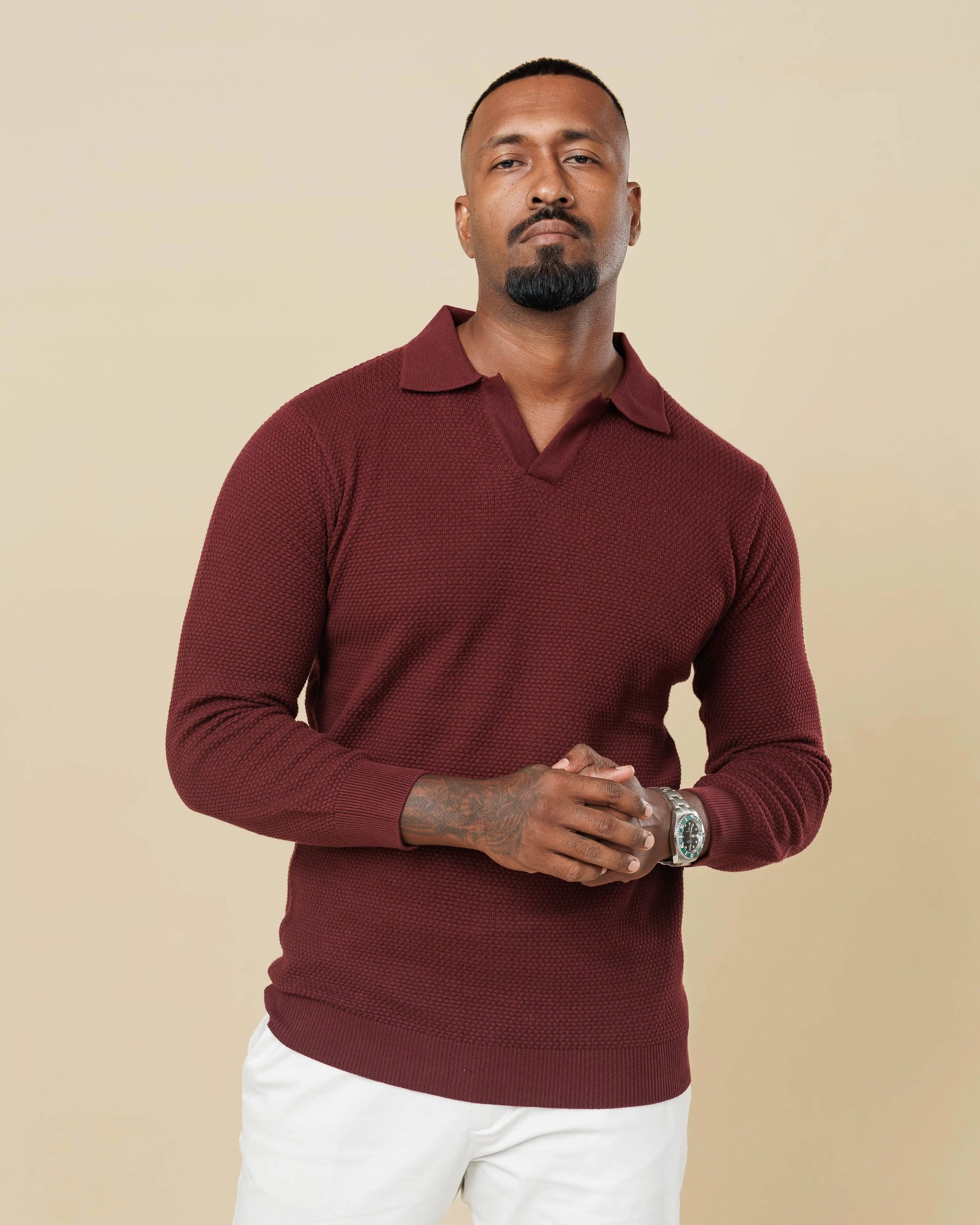
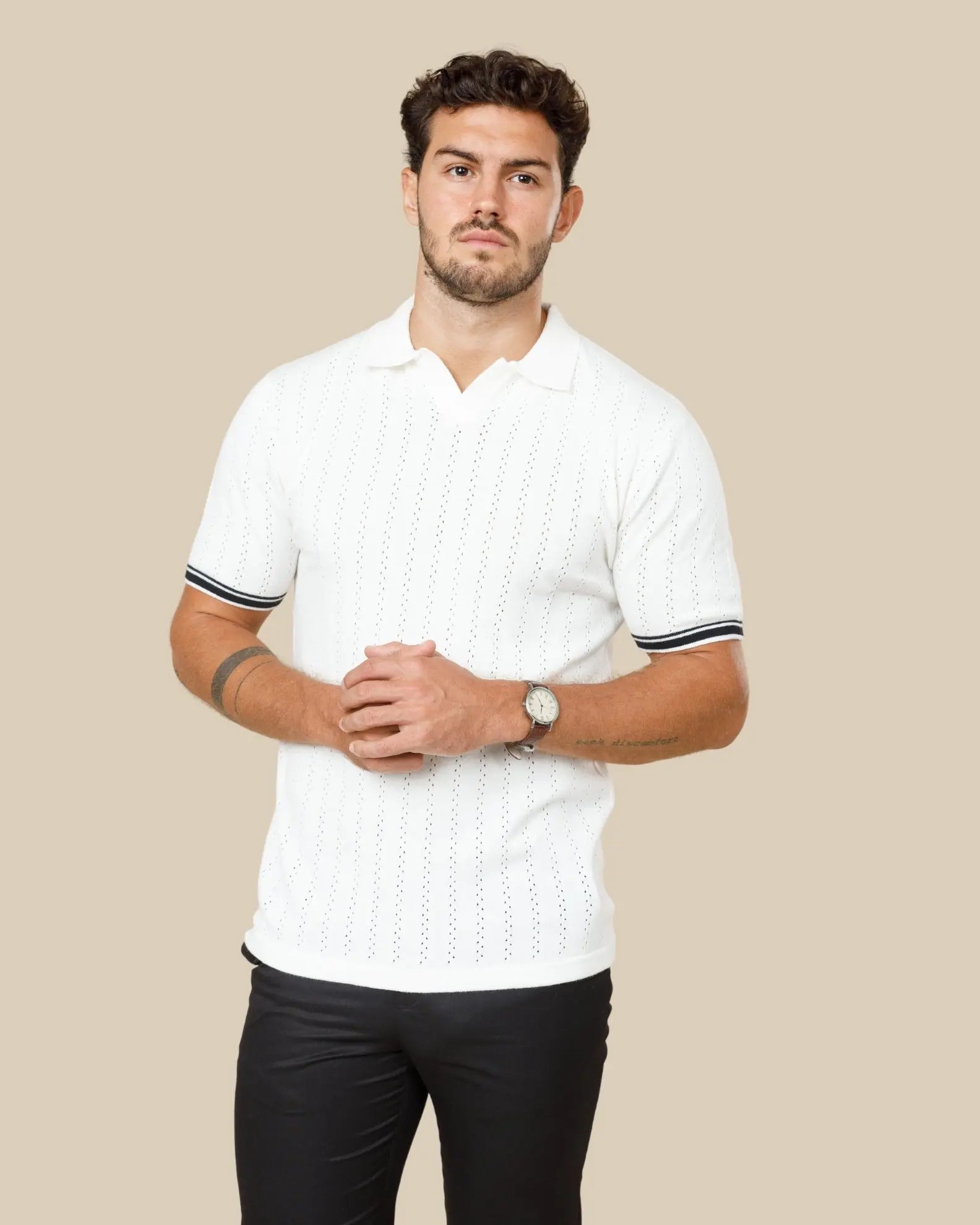
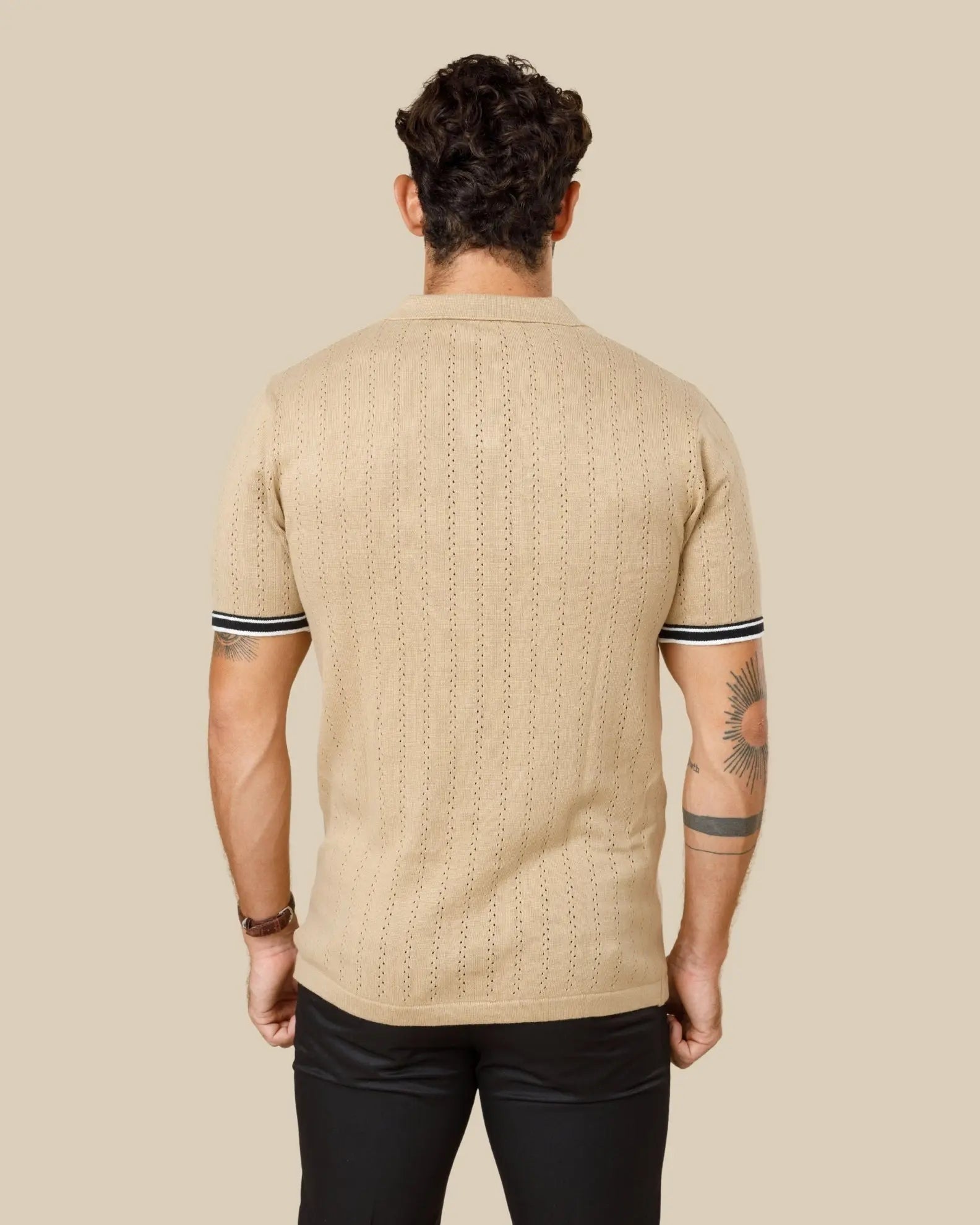
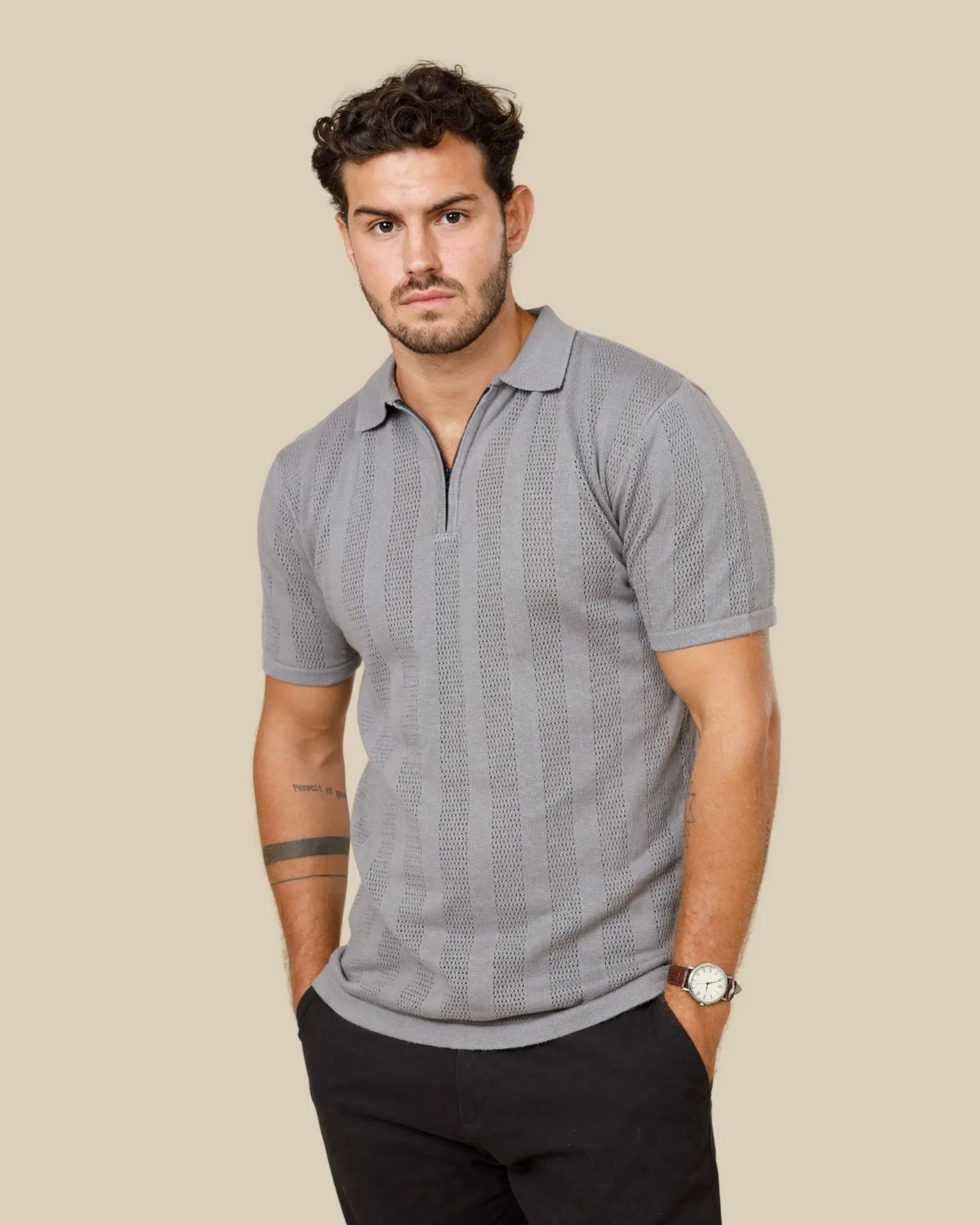
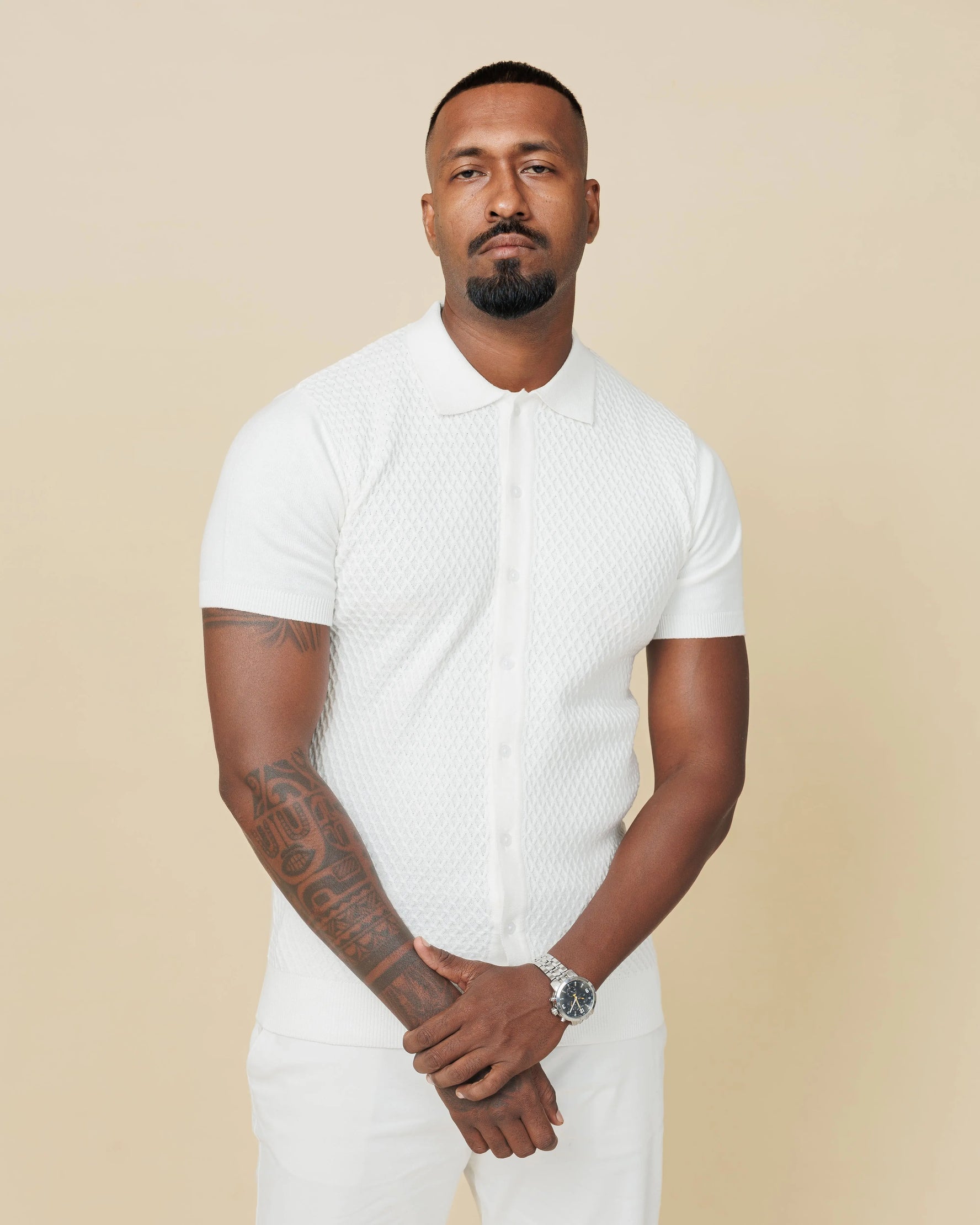
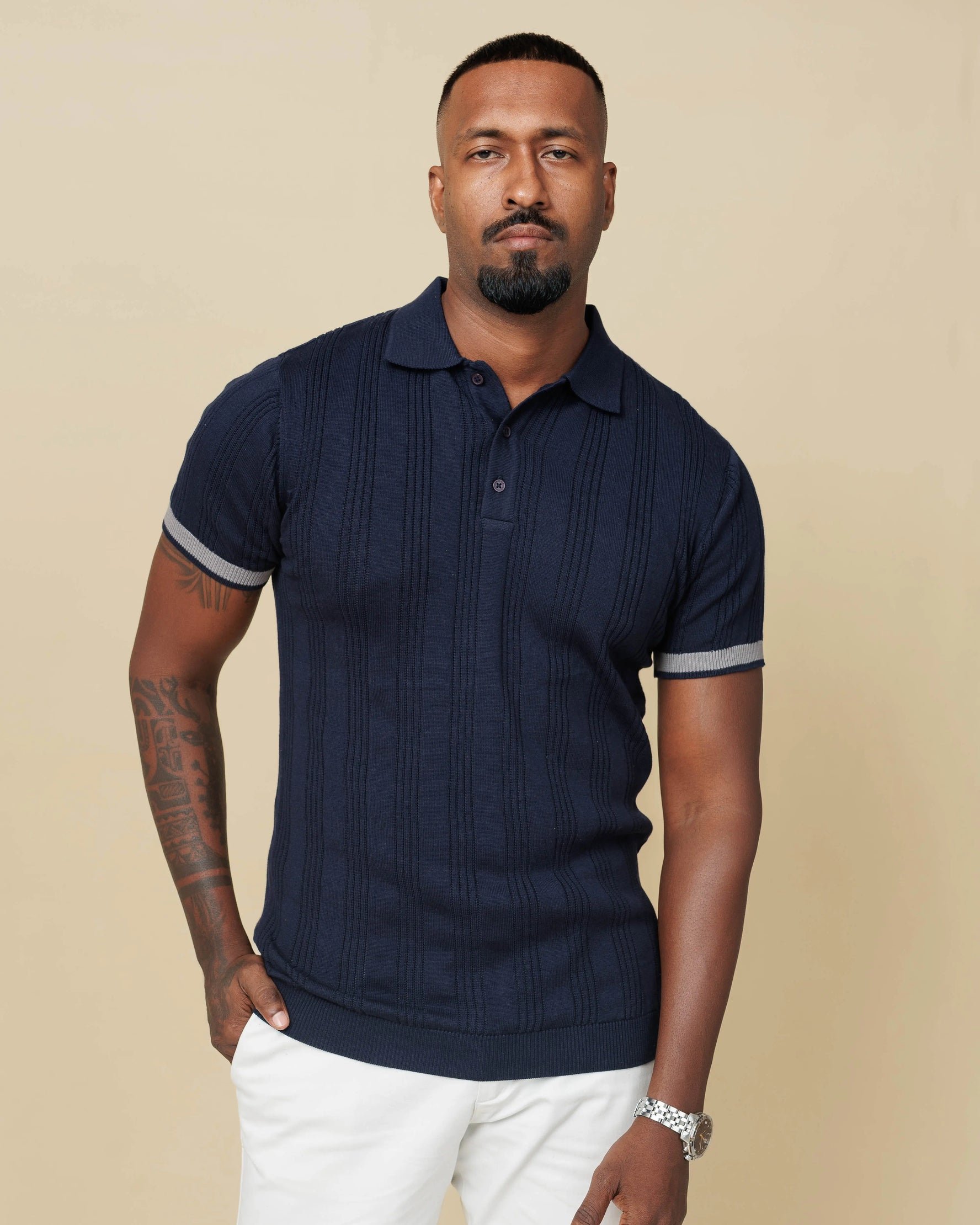
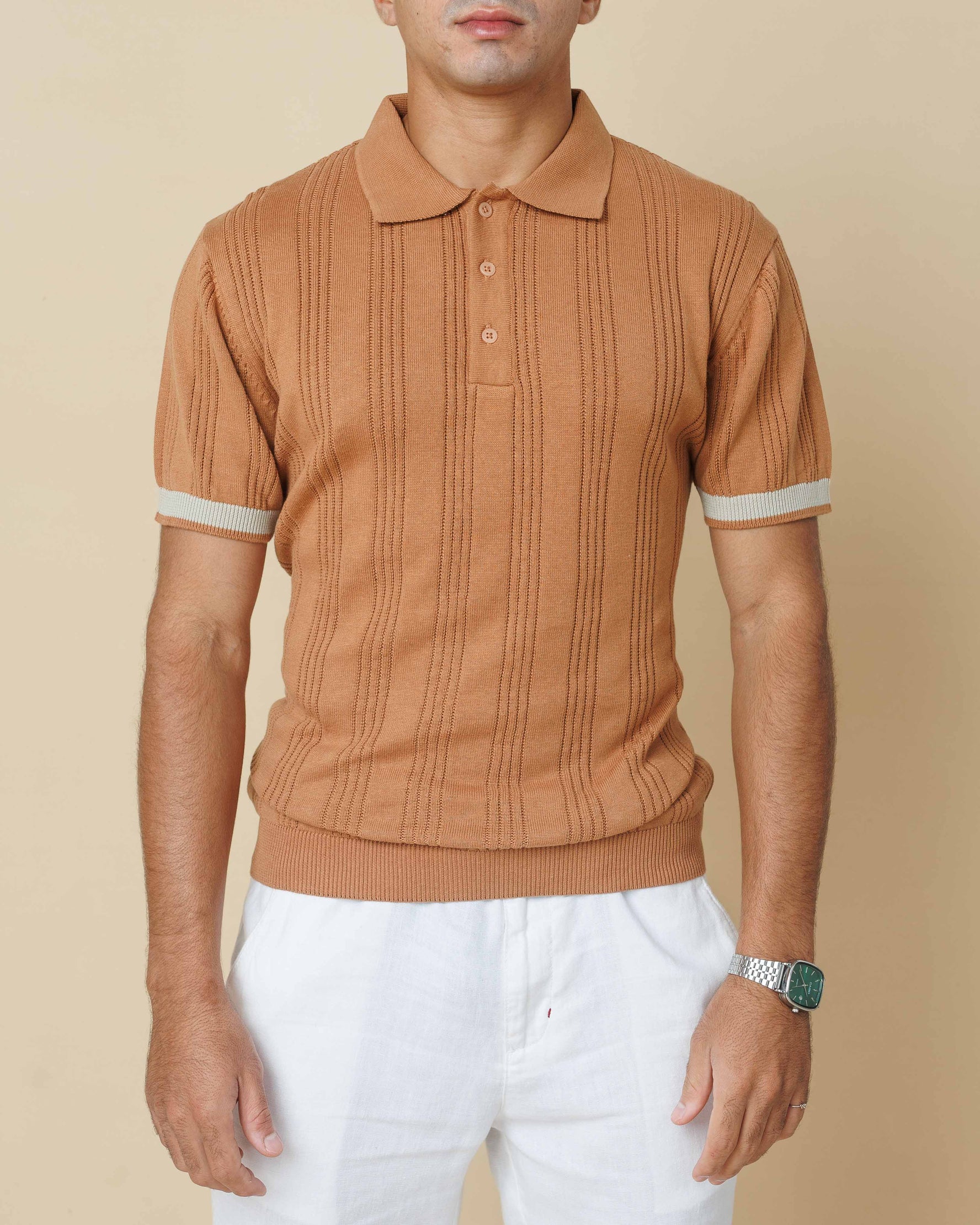
Fine gauge (what we use for most of our range) produces a smooth, lightweight fabric. It layers under jackets, works in warm weather, and looks sharp enough for a restaurant. Our Riviera Collection uses fine-gauge pure cotton knit at around 12-gauge — tight enough to look refined, open enough to breathe in summer.
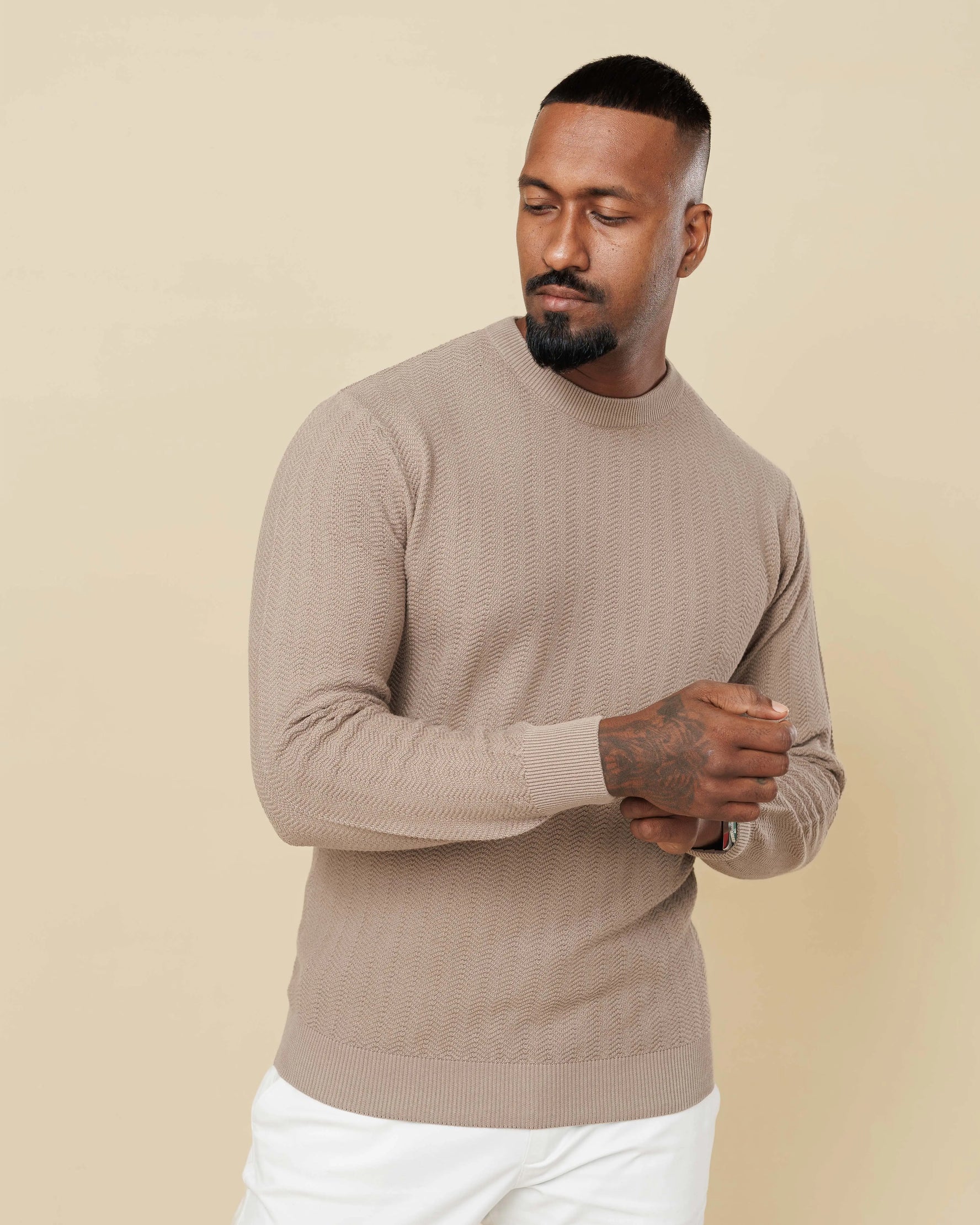
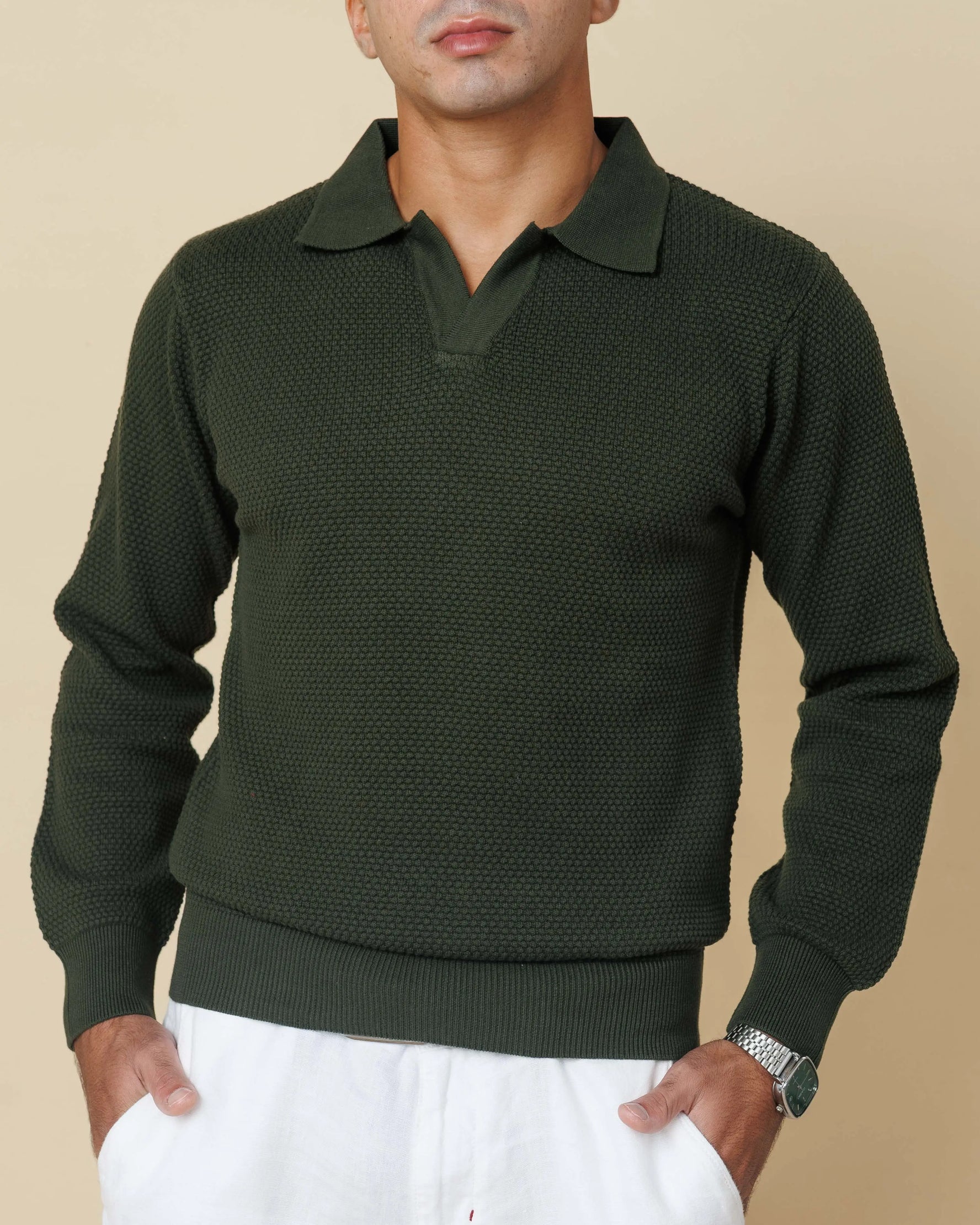
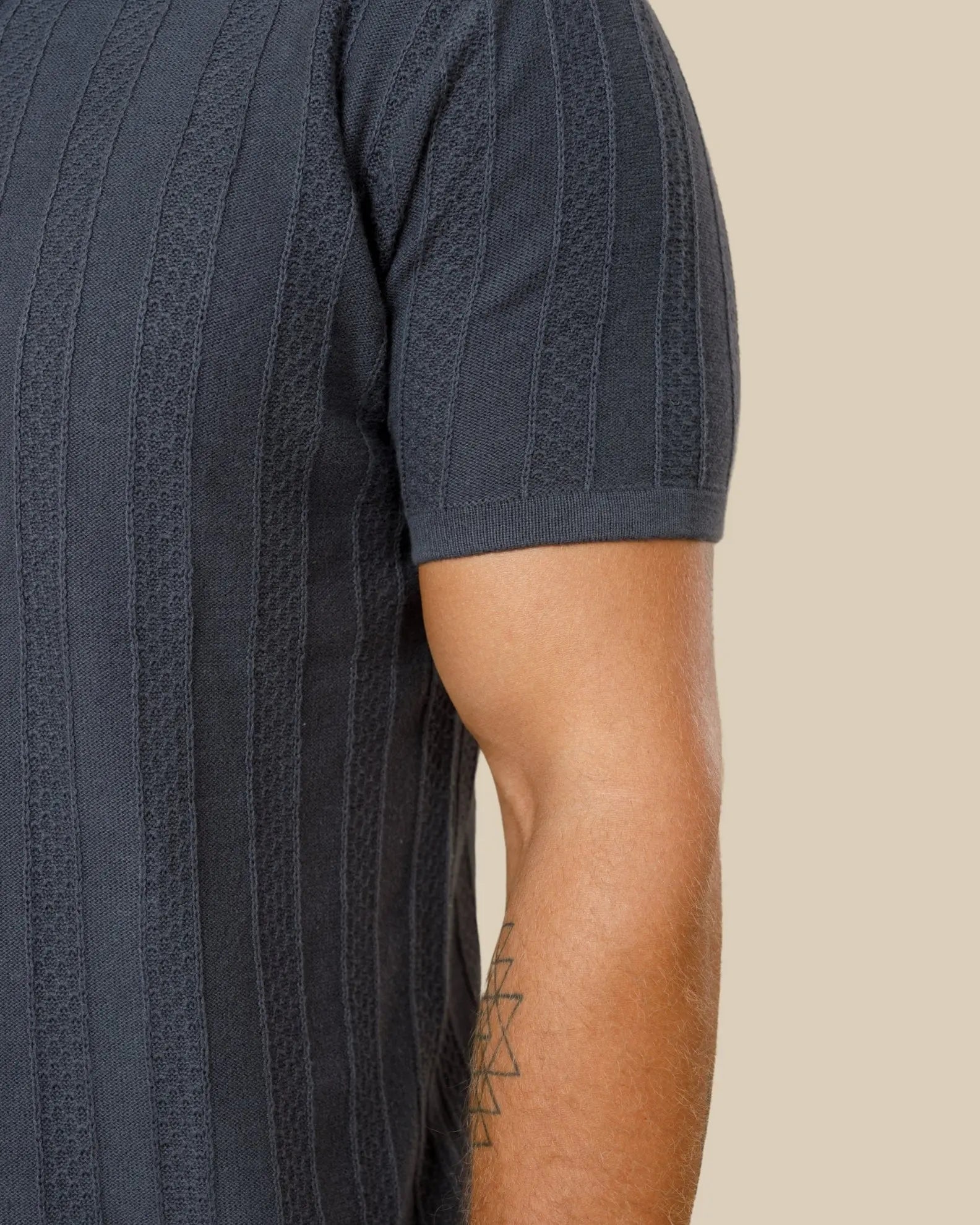
Mid-weight knits (7-10 gauge) add visible texture and warmth. These work best in autumn and spring, worn on their own or under an overcoat. They bridge the gap between a polo and a lightweight jumper. You'll find these in our Designer Jumpers range.
Chunky knits (5-gauge and below) are statement pieces — thick, textured, clearly casual. They don't layer well under anything and they're too warm for most of the year. Great for weekends in winter, wrong for almost everything else.
How a Knit Polo Should Fit
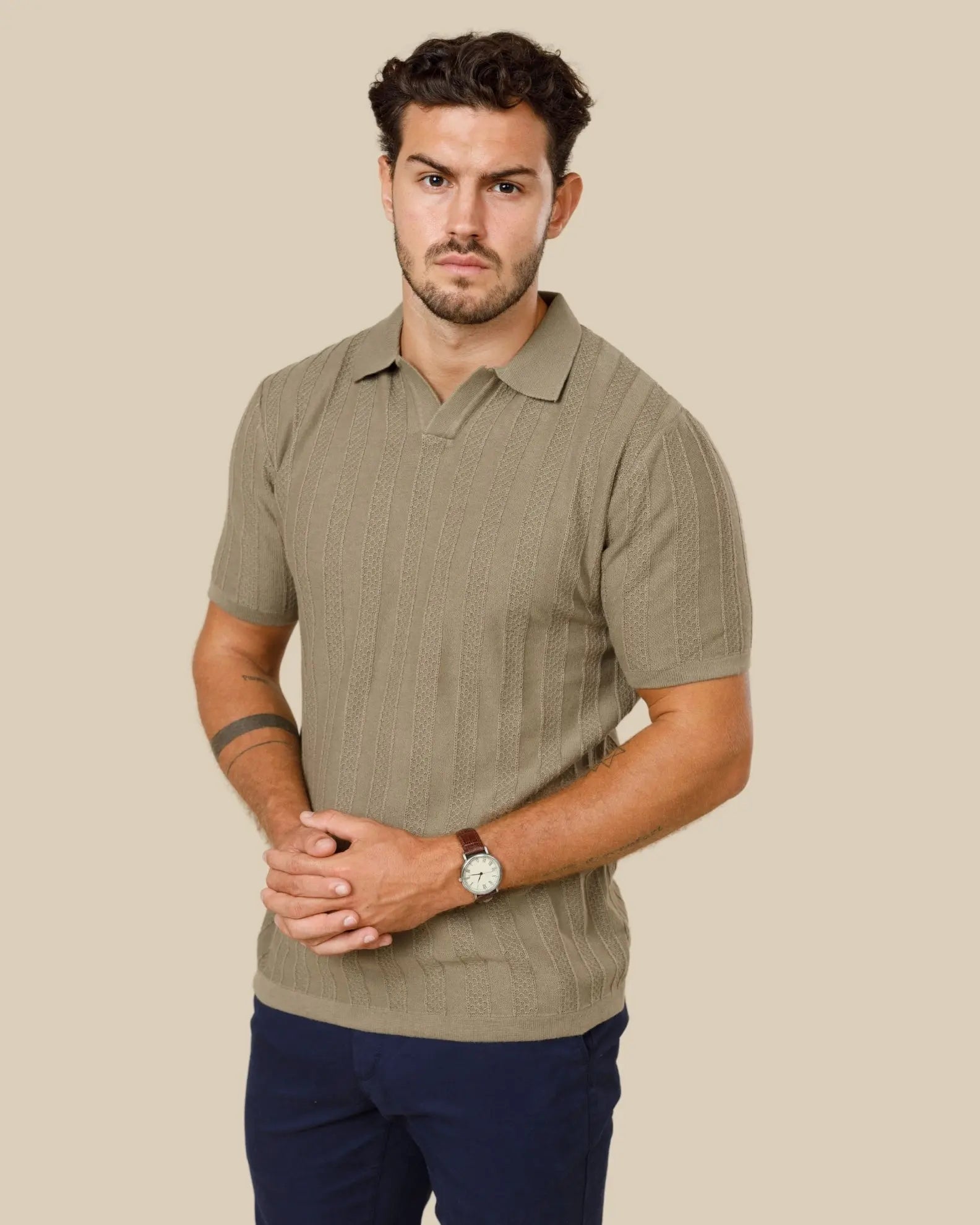
The shoulder seam should sit at the edge of your shoulder bone — not drooping down your arm, not pulling towards your neck. This is the one measurement you can't fix with tailoring, so get it right first.
Through the body, a knit polo should follow your shape without clinging. You should be able to pinch about an inch of fabric at the side seam. Too tight and you'll see every contour (knit fabric hides nothing). Too loose and you lose the clean silhouette that makes a knit polo worth wearing over a standard polo.
Length should finish at or just below the belt line. Short enough to wear untucked with clean proportions, long enough to tuck into trousers if you prefer. Sleeves should end at mid-bicep for short sleeves, or at the wrist bone for long sleeves — never bunching.
If you're between sizes, our sizing guide has measurements for every product. Knit fabric does relax slightly after the first few wears, so don't size up to compensate.
The Riviera Collection
Fine-gauge pure cotton knit polos, designed in London, made in Sri Lanka.
Four Ways to Wear It
With tailored trousers and a blazer. The combination that makes knit polos worth owning. A fine-gauge polo in navy or charcoal under an unstructured blazer replaces a dress shirt for most smart-casual situations — dinners, client meetings, evening drinks. The collar gives you structure without a tie. Choose a polo in a darker shade than your blazer for contrast.
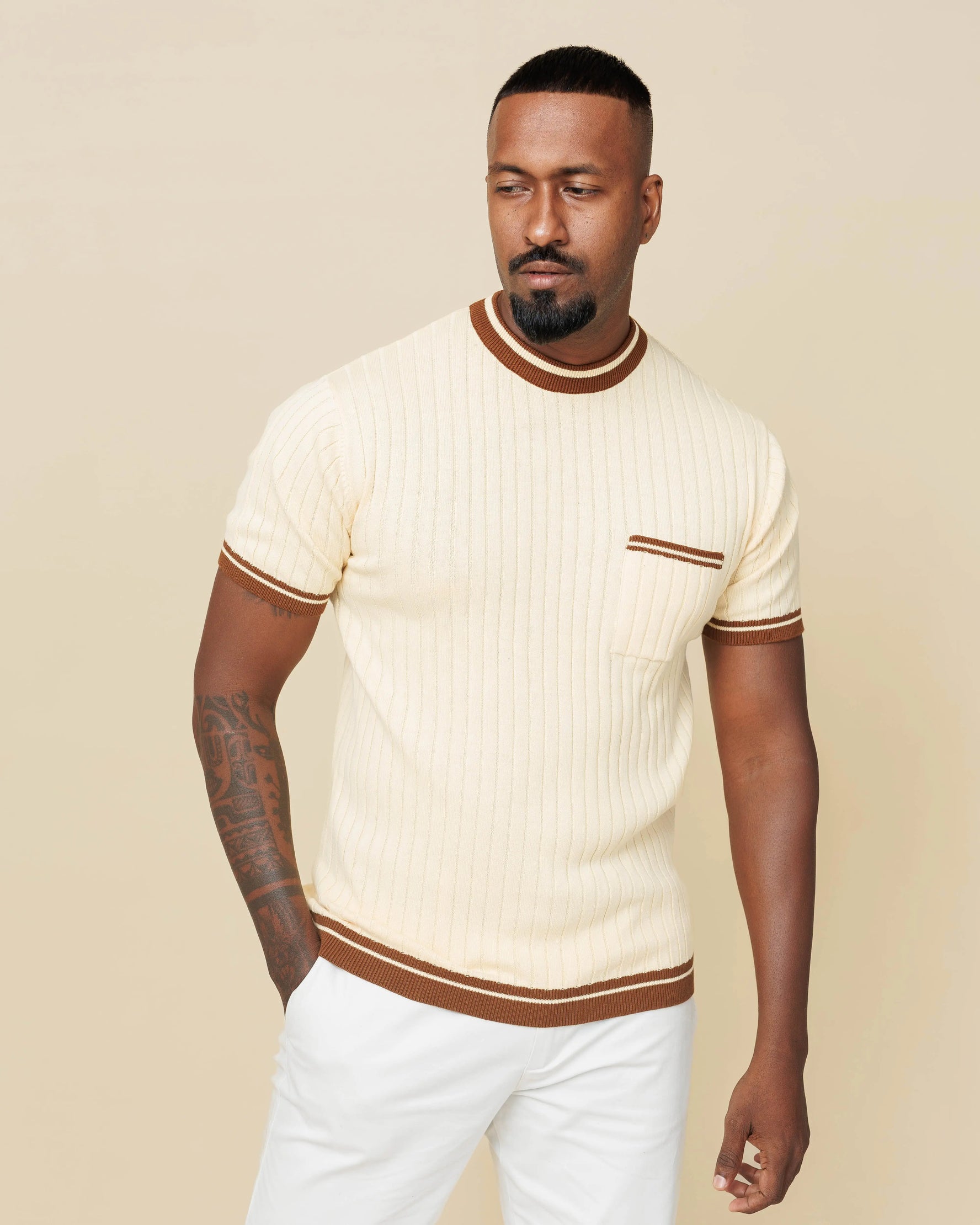
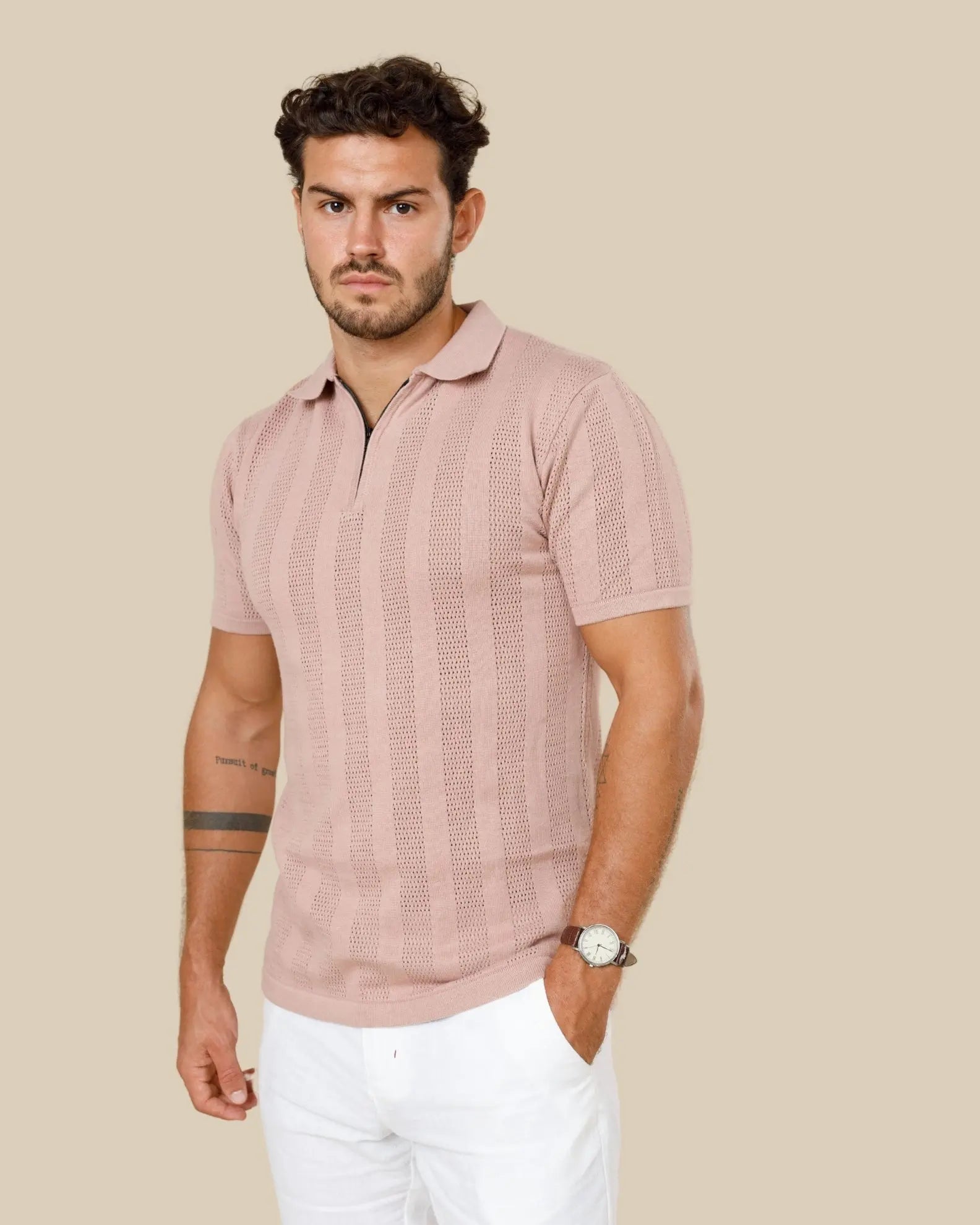
With chinos or dark denim, on its own. The everyday outfit. A well-fitting knit polo with clean trousers and leather shoes or white trainers. This is where fit matters most — with nothing layered over it, the polo is doing all the work. Stick to solid colours or subtle textures (ribbed, tonal stripes). Avoid large logos.
Layered under a mac or overcoat. In cooler months, a long-sleeve knit polo works as a replacement for a shirt-and-jumper combination. The single layer is thinner, sits cleaner under outerwear, and looks more intentional. Navy, black, or cream work best here.
Open collar, rolled sleeves, relaxed. For holidays, weekends, and warm evenings. A lighter-coloured knit polo with the top button undone, sleeves pushed above the elbow, worn with linen trousers or tailored shorts. The texture of the knit keeps it from looking like an undershirt. Browse our summer collection for options built for this.
What to Look for Before You Buy
Fabric composition. Pure cotton knits breathe well and soften with wear. Cotton-silk blends add a slight sheen and smoother drape. Merino wool regulates temperature but needs more careful washing. Avoid high percentages of polyester — it pills, traps heat, and cheapens the look. Every LCY polo lists its exact composition on the product page.
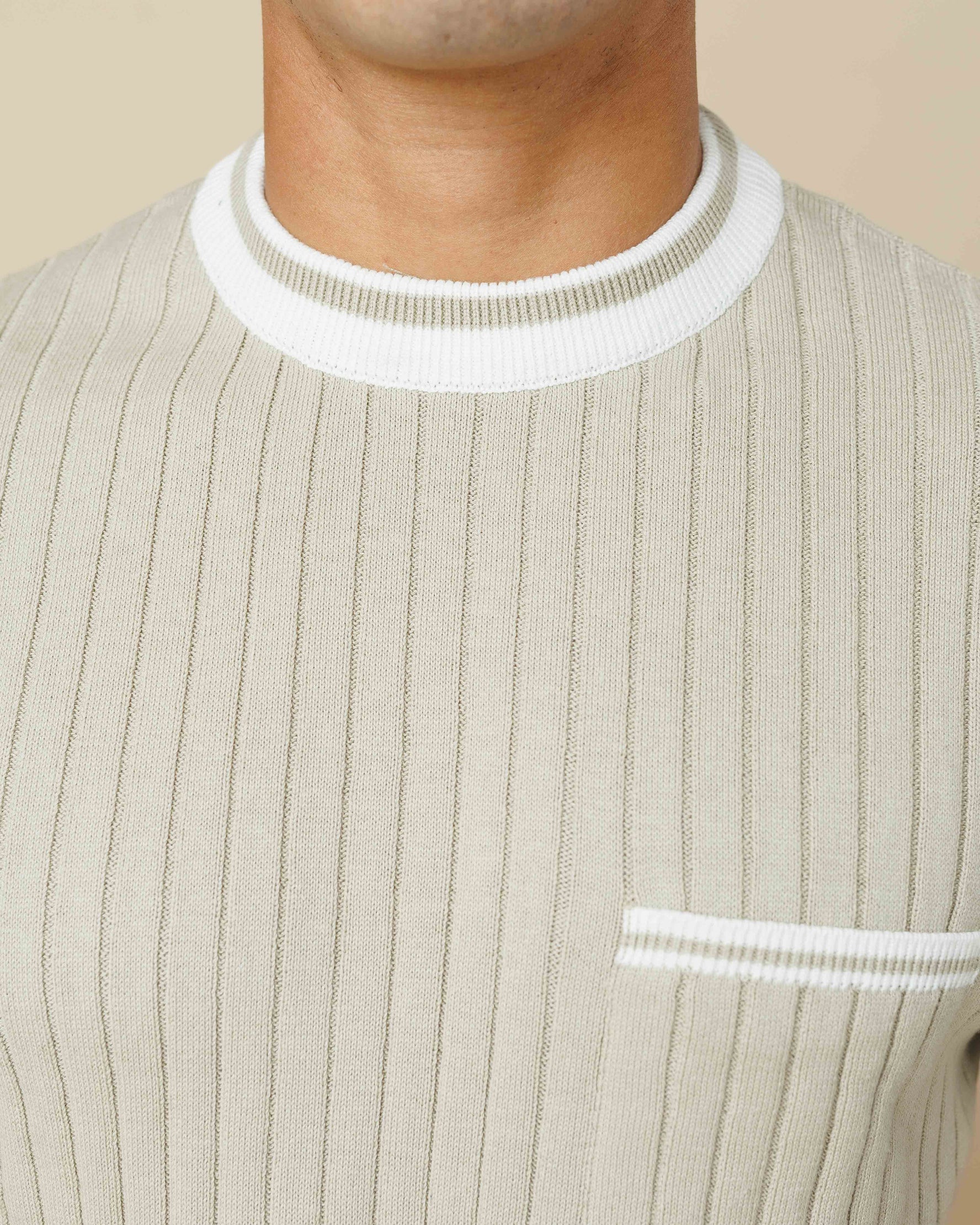
Collar construction. The collar should hold its shape without curling, even after washing. Better knit polos have reinforced collar ribs or a slightly tighter gauge at the collar than the body. If the collar flops or curls on the first wear, the garment won't improve with time.
Seam finishing. Turn the garment inside out. Clean, flat seams that don't irritate skin are a sign of proper construction. Linked seams (where the knitted panels are joined stitch-by-stitch rather than overlocked) are the gold standard — they're flat, flexible, and almost invisible.
Button quality. Shell or corozo buttons feel solid and look natural against knit fabric. Cheap plastic buttons cheapen the entire garment. Check that buttonholes are cleanly finished and properly reinforced — this is where corners get cut first on budget knit polos.
How We Make Ours
Every LCY London knit polo is made in our single production facility in Sri Lanka by a team averaging 25+ years of experience. The process starts with cotton selection — each batch is tested for fibre strength, consistency, and hand-feel before production begins.
Our fabrics carry OEKO-TEX Standard 100 certification, independently tested for over 100 harmful substances. Patterns are designed in London and adapted for production by our master pattern cutter, Rajitha, who ensures fit consistency across every size. Kumari, our head of knitting for 25 years, oversees the knitting of every garment we produce.
Each finished polo passes through an 18-point quality inspection covering stitching, seam strength, colour accuracy, button security, and collar shape. Pieces that don't pass are reworked or rejected — there's no grading system for "good enough." Read the full story on our production page.
Key Takeaways
- Construction matters: Knit polos are knitted from yarn, not woven. This gives them drape, stretch, and layering ability that pique polos can't match.
- Gauge determines use: Fine gauge (12+) for year-round versatility and layering. Mid-weight (7-10) for standalone autumn/spring wear. Chunky (5-) for casual winter only.
- Fit is everything: Shoulder seam at the shoulder bone, about an inch of pinch at the side seam, hem at the belt line.
- Check the details: Collar construction, seam finishing, fabric composition, and button quality separate good knit polos from disposable ones.
- Pure cotton breathes best: Avoid high polyester content. Cotton, cotton-silk, and merino are the materials worth paying for.
Find Your Knit Polo
Pure cotton, fine-gauge knit polos. Designed in London, made in Sri Lanka.
Need help? Get in touch or visit one of our stores.


Popular Items